


Flat-Pack vs Assembled Furniture: Which Is Better for Your Home?

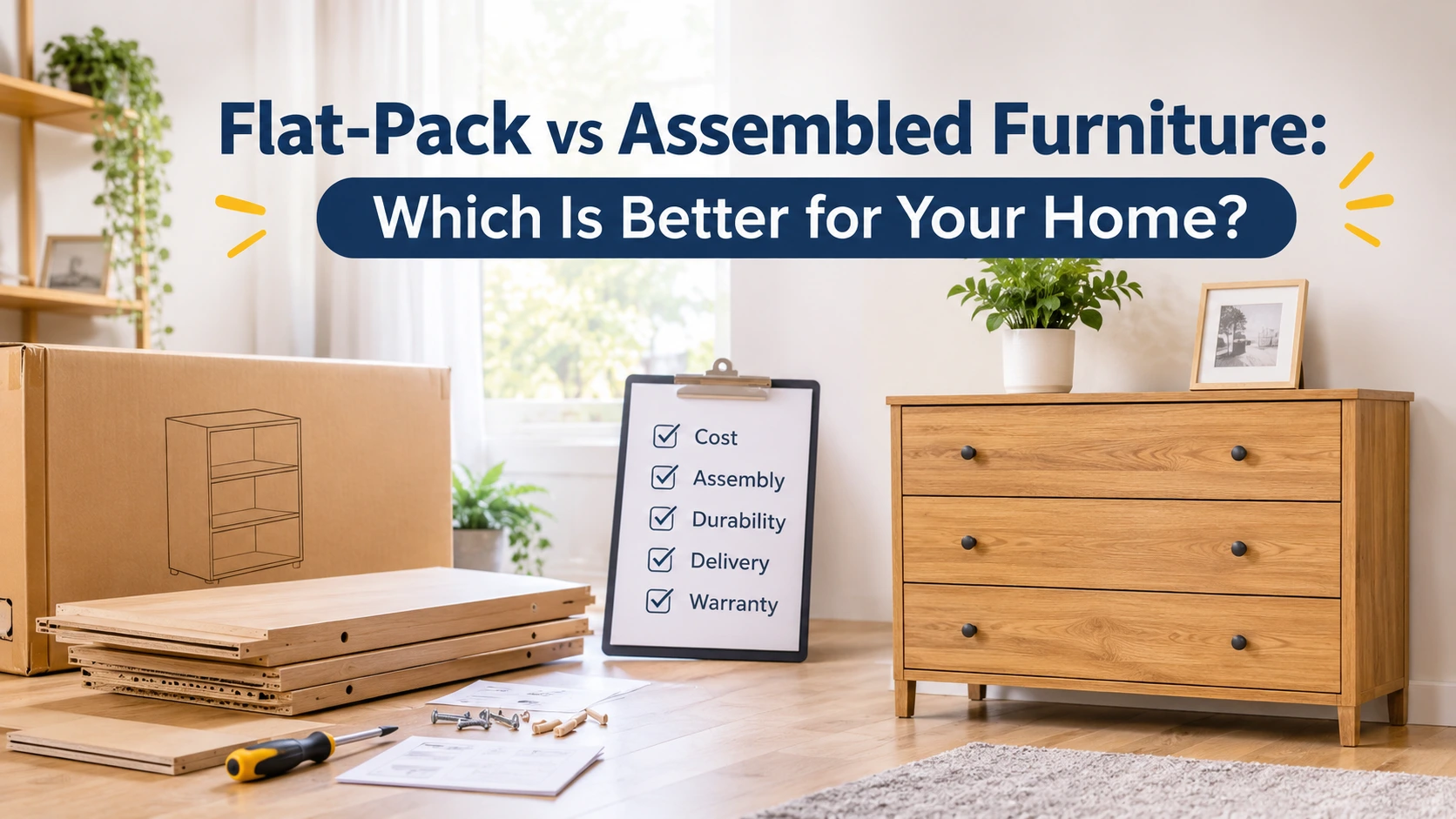
Choosing between flat-pack and assembled furniture comes down to what works best for your space, budget and lifestyle. Flat-pack furniture is a great option if you’re looking for something affordable, easy to transport and convenient to move around. Assembled furniture, on the other hand, is often a better fit for pieces you plan to keep for years, like sofas, dining tables and wardrobes.
In this guide, we’ll break down the differences between flat-pack and assembled furniture, from cost and durability to delivery, space and sustainability. We’ll also share a simple checklist to help you find the right fit for your home.
Key Takeaways
- Flat pack furniture costs less upfront and is easy to carry. You must build it or pay someone to do it.
- Assembled furniture arrives ready to use and often has stronger joints. It costs more and needs clear access to your home.
- Furniture assembly costs add up. In the US, Taskrabbit reports an average of $34 per hour (2026).
- For most homes, a mix works best: assembled for daily-use pieces, flat-pack for the rest.
Flat Pack vs Assembled Furniture: The Quick Answer
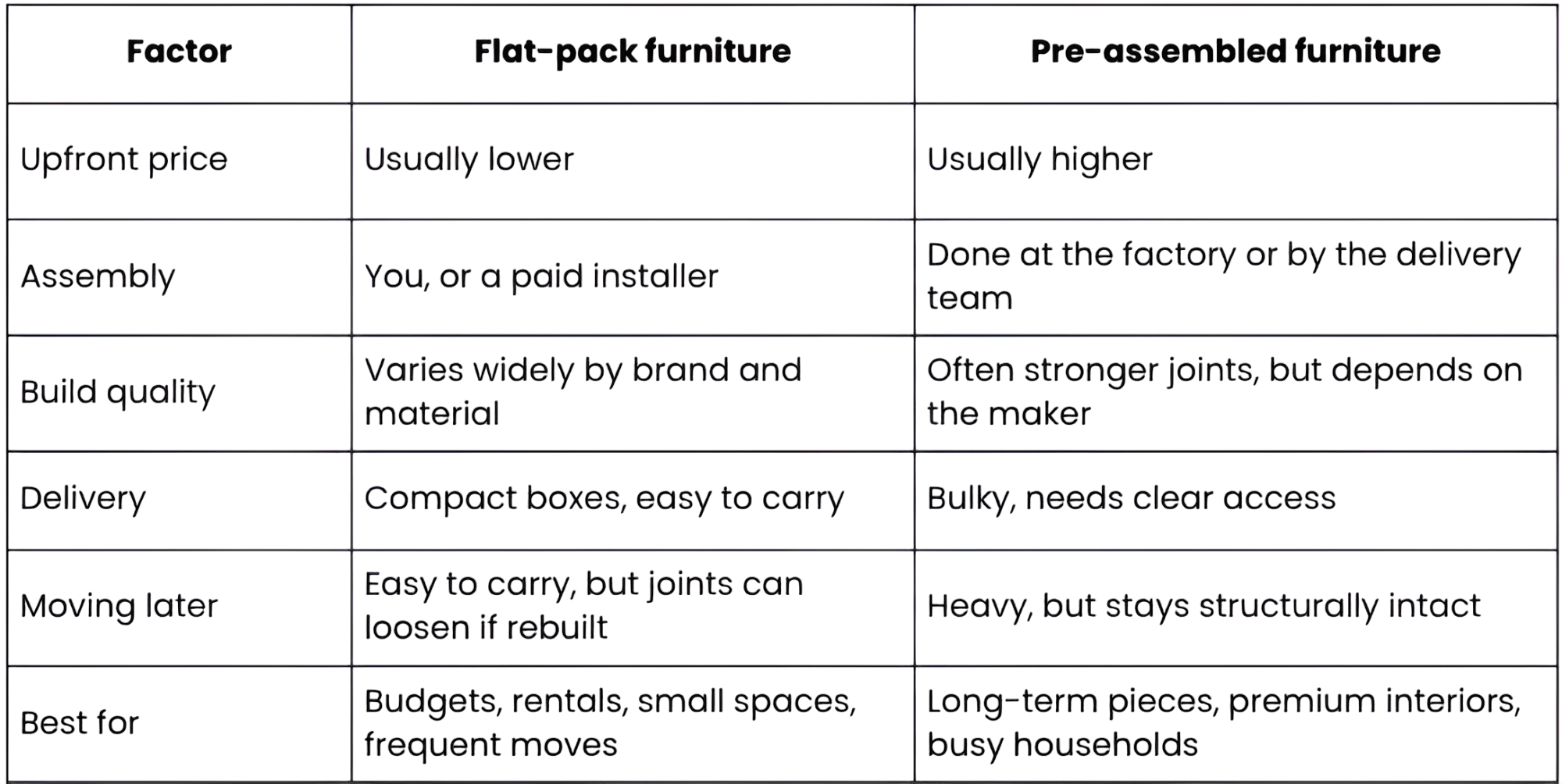
Choose flat-pack if:
- You are on a tight budget.
- Your home has narrow stairs, small lifts or tight corners.
- You move often or rent.
- You enjoy building things, or you are happy to pay for assembly.
Choose assembled furniture if:
- You want the piece to last a decade or more.
- You don’t have the time or tools to build it.
- The piece is large, heavy or load-bearing, like a wardrobe, bed or dining table.
- You want a clean, finished look from day one.
What Is Flat-Pack Furniture?
Flat-pack furniture ships as separate panels, hardware and instructions inside a flat box. You put it together at home. It is also sold as ready to assemble (RTA) furniture or easy to assemble furniture.
The idea is not new. According to the IKEA Museum, IKEA did not invent flat packs. It made them the core of its business model and let customers do the assembly themselves.
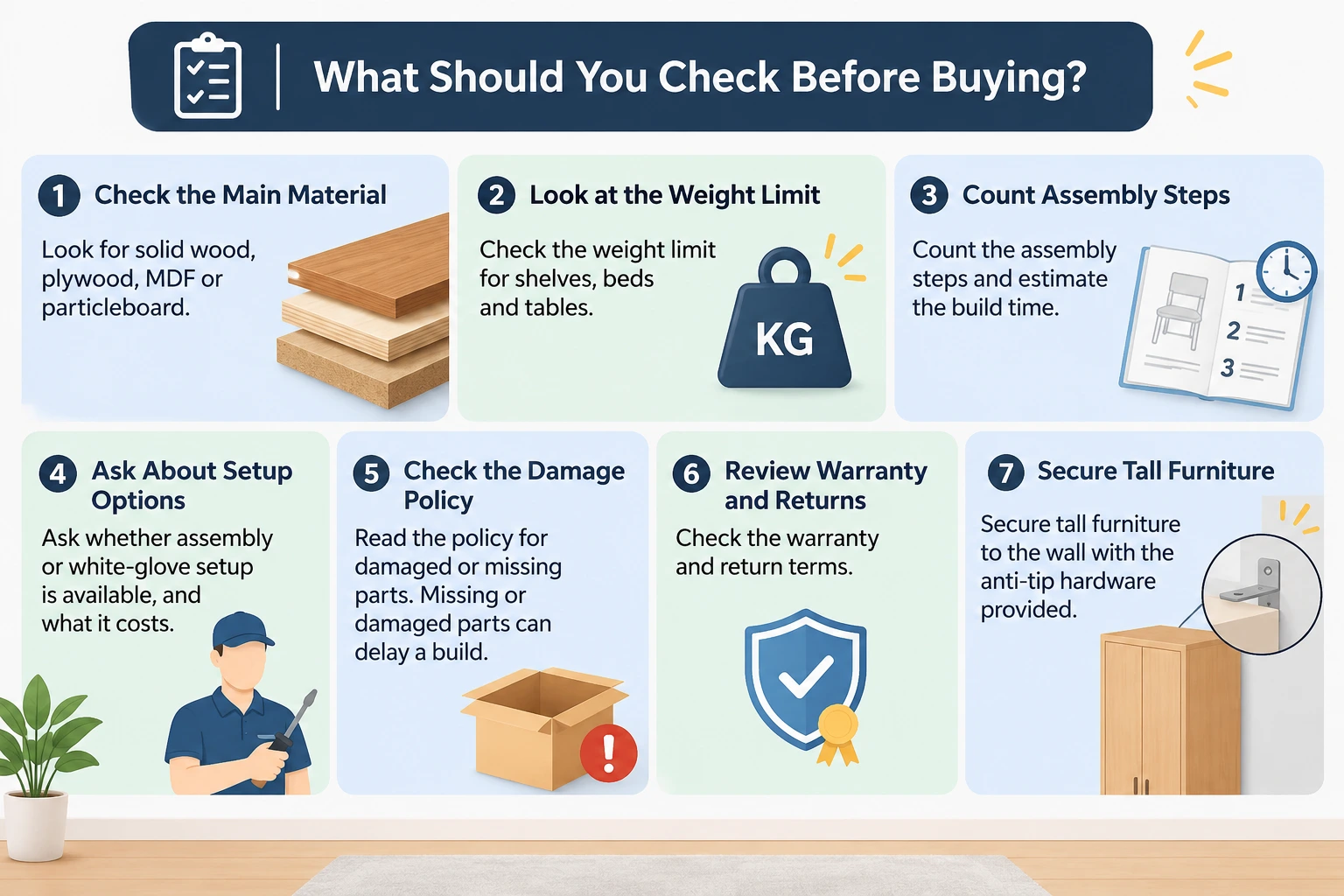
Most flat-pack pieces use screws, wooden dowels, cam locks and metal brackets. The panels may be particleboard, MDF, plywood or solid wood. The material matters more than the format, so always check the product specification.
What Does Ready to Assemble Furniture Mean?
Ready to assemble furniture is furniture sold in parts that the buyer builds. “Easy to assemble” describes the same product. It is a marketing label that suggests fewer steps and fewer tools. Check the part count and build time on the product page before you rely on it.
What Is Pre-Assembled Furniture?
Pre assembled furniture is built in a factory or workshop and arrives ready to place. Some pieces need light setup, such as fixing legs or a headboard.
Sofas, armchairs and upholstered beds are usually sold fully built. Quality wooden furniture often uses traditional joinery, such as mortise and tenon or dovetail joints. Flat-pack designs usually rely on screws, dowels and cam locks instead.
Flat Pack vs Fully Assembled Furniture: Which Is More Affordable, Including Assembly Costs?
Flat-pack furniture usually costs less at checkout. Compact boxes are cheaper to store and ship. In 2012, IKEA’s then-CEO said the flat-pack redesign of its Ektorp sofa cut $128 from the customer price.
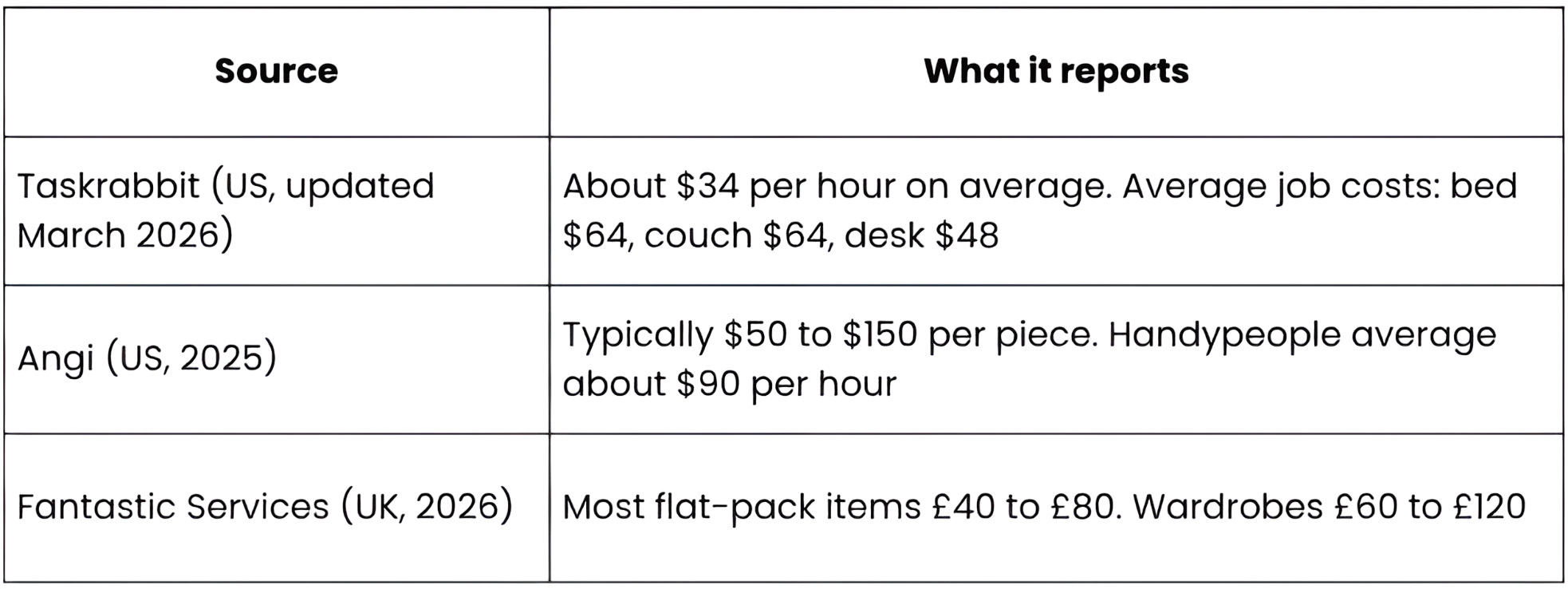
The savings shrink if you hire someone to build the piece. Current furniture assembly costs vary by country and by item:
Which Lasts Longer?
Quality depends more on materials and joinery than on whether a piece arrives flat. A well-designed flat-pack unit in solid wood or good plywood can outlast a poorly made assembled one.
Still, some patterns are worth knowing:
- Factory-assembled pieces are often glued, clamped and checked before they leave.
- Flat-pack pieces rely on fasteners that you must tighten correctly at home.
- Screws in particleboard can loosen if you take the piece apart and rebuild it.
- Beds and dining tables put more stress on joints than a bookshelf does.
For everyday storage that stays in one room, good flat-pack can work well for years. For pieces that carry weight every day, assembled furniture is the safer choice.
How Do Furniture Delivery and Installation Differ?
Furniture delivery and installation work differently for each type.
- Flat-pack: Boxes are easy to carry up stairs. You usually get no setup help unless you book it.
- Assembled: The piece arrives built. The delivery team can often place it in the room. Some premium retailers also remove the packaging. Check what your seller includes.
If you are buying premium pieces, read each product page. Look for how the item ships and whether setup is included. This matters most for large items.
Which Is Easier to Fit Through Doors and Stairs?
Flat-pack is easier. A fully assembled wardrobe may not turn a tight stair corner. Measure before you order.
- Measure doorways, hallways, stairwells and lift interiors.
- Measure the turns and landings along the route.
- Compare those numbers with the packed or assembled size on the product page.
Flat-pack has a clear advantage in apartments, older homes and upper floors without lifts.
Which Is Easier to Move?
Assembled furniture is heavy, but it stays strong. Flat-pack furniture is lighter to carry, yet rebuilding it can weaken the joints.
If you move often, choose flat-pack pieces with sturdy metal fittings. Keep the original hardware. If you plan to stay put, assembled pieces are a better long-term investment.
Which Is Better for the Environment?
Flat packs save space in trucks and warehouses. The IKEA Museum notes that flat, stackable packages fit more product into each truck and container. That means fewer journeys.
A January 2012 wire report published by HeraldNet gave one example. IKEA redesigned the Ektorp sofa so it could be flat-packed. The company said the package became about half its former size. It claimed this took 7,477 trucks off the road and cut yearly CO2 emissions by 4,700 tons.
These are company claims, and they cover transport only. A piece that falls apart after a few years must be replaced, and that adds waste. Durability matters as much as packaging.
Which Should You Choose? A Buyer-by-Buyer Guide
Homeowners furnishing a new home: Mix both. Use assembled furniture for sofas, beds and dining tables. Use flat-pack for shelving, desks and secondary storage.
Families: Choose assembled for items that children climb on or pull at. Choose flat-pack for rooms that change as children grow.
First-time buyers: Flat-pack stretches a budget further. Budget for assembly if you don’t own tools.
Landlords and property developers: Flat-pack suits furnished rentals because pieces are easy to replace. For show homes and premium units, assembled furniture gives a more finished look.
Luxury and design-led buyers: Assembled furniture is the usual choice. It offers refined joinery, upholstery and finishes, and it arrives ready for the room.
Small flats and difficult access: Flat-pack is often the only practical option.
Final Verdict: Flat Pack vs Assembled Furniture
There is no single winner in the flat pack vs assembled furniture debate. Flat-pack wins on price, portability and tight access. Assembled furniture wins on strength, convenience and finish. For most homes, a smart mix works best. Choose assembled for the pieces you use every day. Choose flat-pack for the rest.
Frequently Asked Questions
1. Is flat-pack furniture cheaper than assembled furniture?
Usually, yes. Flat-pack furniture often has a lower upfront price. If you pay for assembly, the gap narrows. Add the assembly fee to the price before you compare.
2. Is assembled furniture better quality than flat-pack?
Not always, but it often has stronger joints because it is built and checked in a factory. Material quality matters more than format. Solid wood or good plywood beats thin particleboard in either type.
3. Does flat-pack furniture last as long as pre-assembled furniture?
It can, if the materials are good and you assemble it correctly. Pieces that carry daily weight or get moved often tend to wear out sooner in flat-pack form.
4. How much does it cost to assemble flat-pack furniture?
It depends on where you live and what you are building. Taskrabbit reports an average of $34 per hour in the US in 2026. Angi reports typical per-piece costs of $50 to $150 in 2025. In the UK, most flat-pack items cost about £40 to £80, according to Fantastic Services in 2026.
5. Can you take apart and rebuild flat-pack furniture?
Yes, but each rebuild can loosen the joints, especially in particleboard. Keep all hardware. Follow the instructions in reverse, and tighten fittings gently when you rebuild.
6. What is the difference between ready to assemble and pre assembled furniture?
Ready to assemble furniture arrives in parts, and you build it. Pre assembled furniture arrives built, or needs only light setup such as attaching legs.
7. Which is better for a small apartment or hard-to-reach room?
Flat-pack is usually better. The boxes fit through narrow doors and stairwells that a built wardrobe or bookcase cannot pass.
8. Is it worth paying for delivery and installation?
Often, yes, for large or heavy pieces. Professional setup saves time and avoids mistakes. Someone else also removes the packaging. For a small shelf or side table, building it yourself is usually fine.


