


Wooden Bed Frame vs Upholstered Bed: Pros, Cons and Maintenance

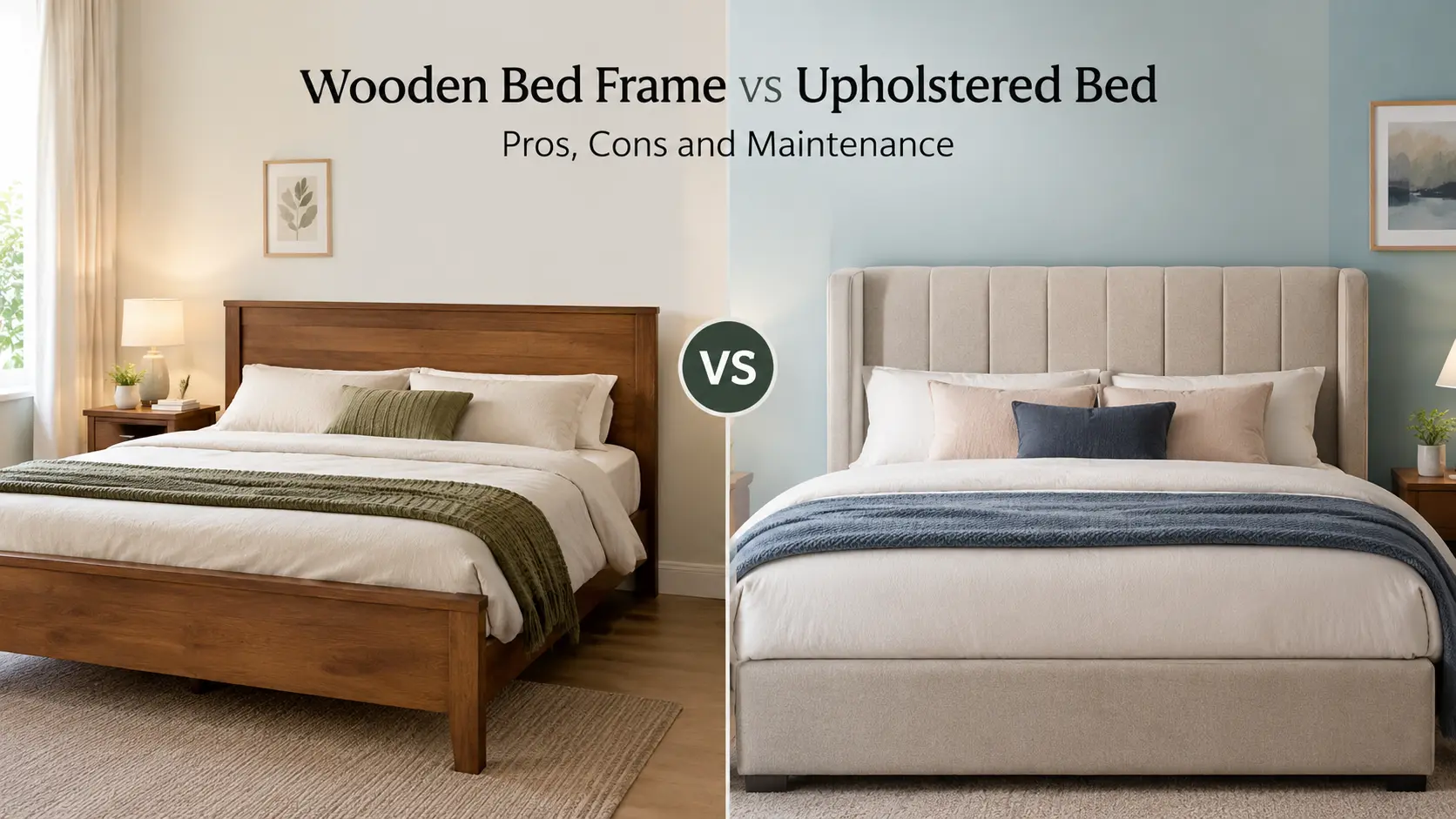
wooden bed frame vs upholstered bed ? Neither wins for everyone. Choose wood if you want long-term durability and easy care. Choose upholstery if you want a softer look and a padded headboard.
The right pick depends on how you live, not only on how the bed looks. This guide gives you a bed frame material comparison, the pros and cons of each type, simple care steps and a buying checklist.
Key Takeaways
- Durability: Solid hardwood frames are widely seen as the longest-lasting option. Upholstered frames can be strong too, but the fabric wears first.
- Comfort: Upholstered headboards are softer to lean on.
- Cleaning: Wood wipes clean. Fabric needs regular vacuuming and fast spill care.
- UK buyers: Upholstered beds must meet UK fire safety rules.
- Best of both: A solid timber frame with an easy-clean upholstered headboard.
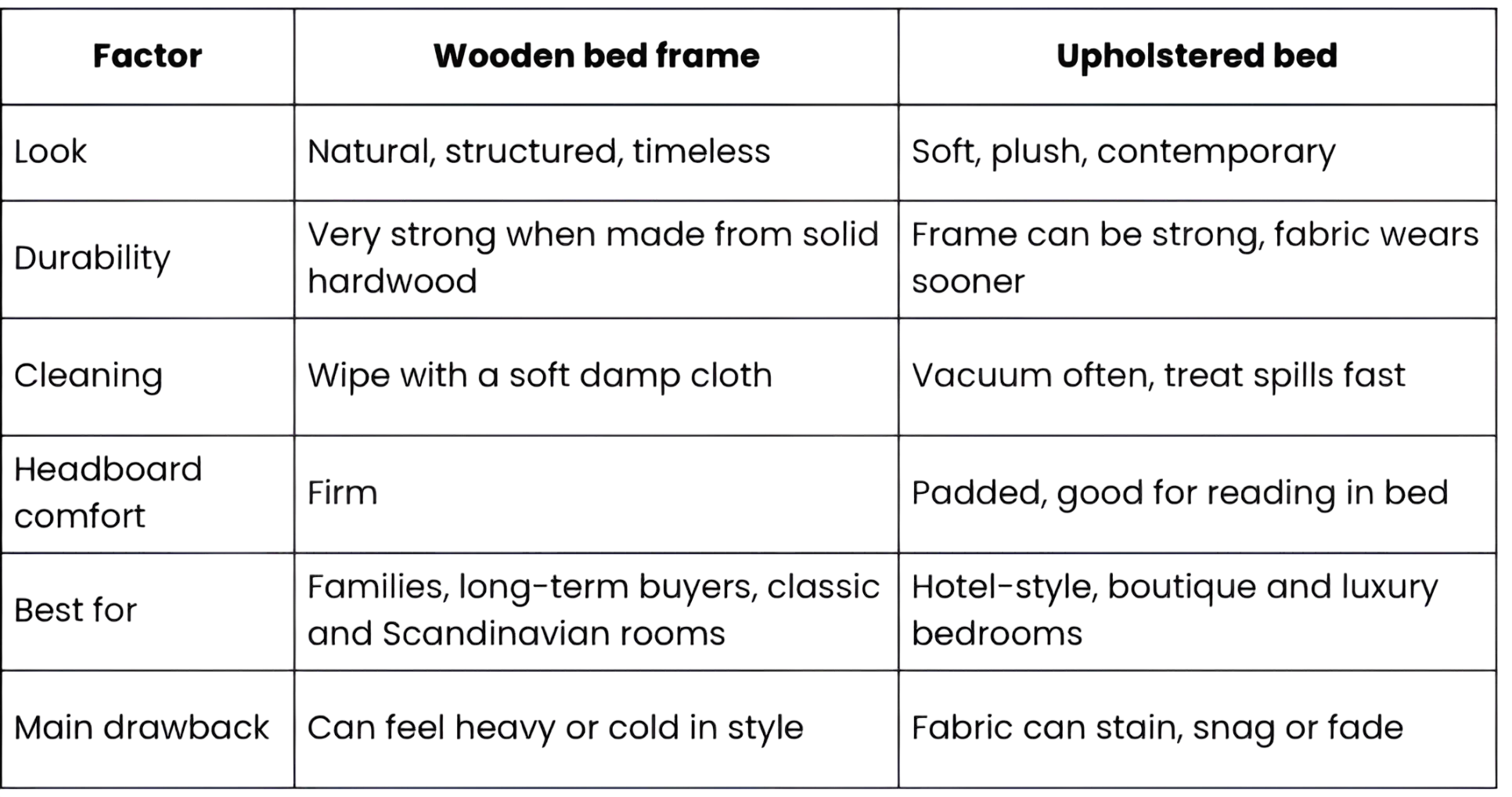
Woodecn Bed Frame vs Upholstered Bed: Quick Comparison
 What Is a Wooden Bed Frame?
A wooden bed frame is a bed base built mainly from timber. It usually has a headboard, side rails, a footboard and slats that hold the mattress.
The wood type matters. Solid hardwoods such as oak, walnut and ash are dense and strong. Softwoods such as pine cost less but dent more easily. Some budget beds use engineered boards like MDF or particleboard with a wood-effect finish. These look similar but age very differently.
When you compare a wooden bed frame vs an upholstered bed, always ask what the wood actually is. “Wooden” on a product page can mean solid oak or a veneered board.
 What Is an Upholstered Bed?
An upholstered bed is a frame covered in padding and fabric. The frame is usually timber or metal. The cover can be velvet, linen, bouclé, cotton blends or faux leather. Headboards often have buttoning, channels or a wingback shape.
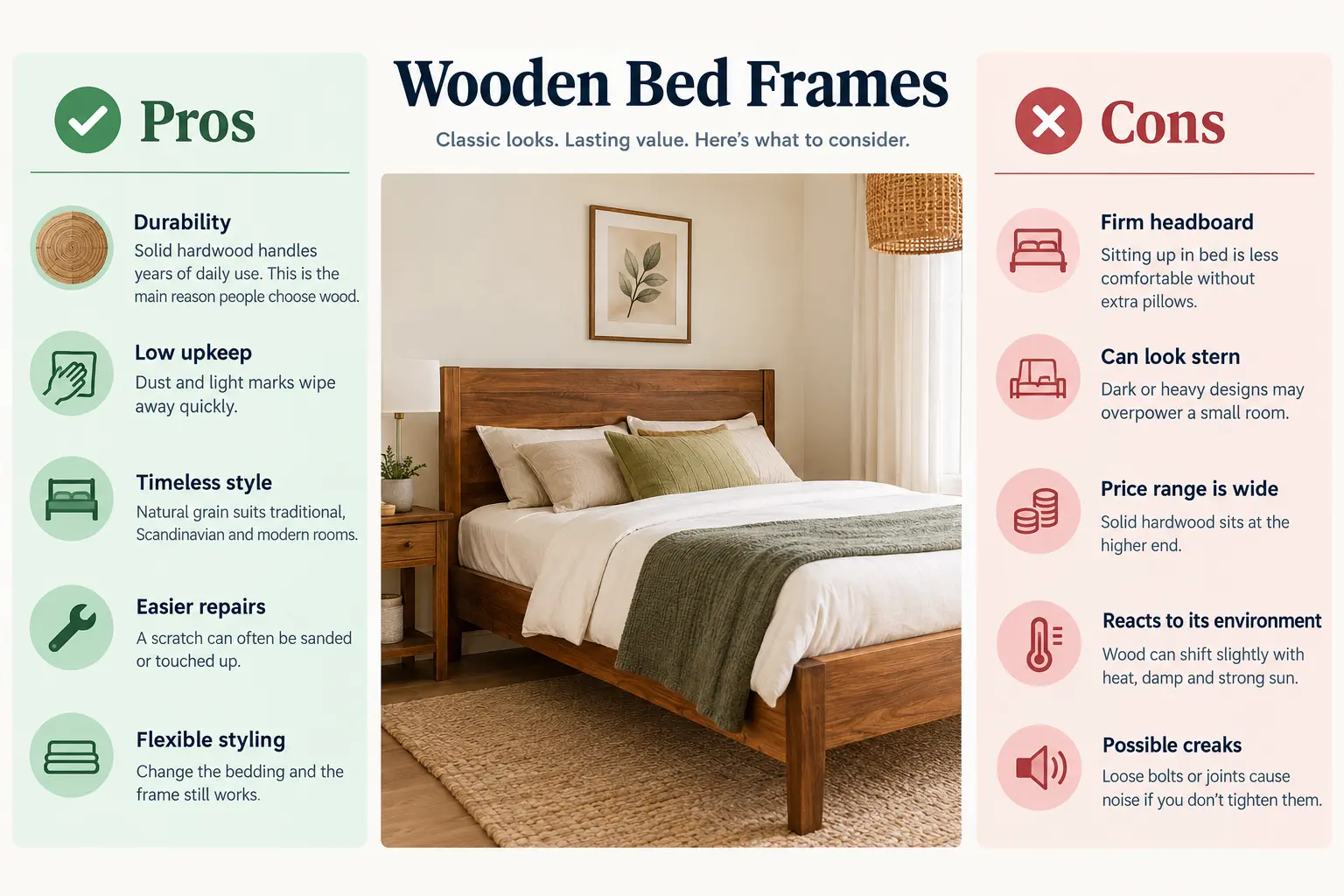
Advantages of Upholstered Beds
These are the main advantages of upholstered beds:
- Comfortable headboard. Padding supports your back when you read or watch TV in bed.
- Softer feel. Fabric softens hard lines and adds texture to the room.
- Wide design choice. Fabrics come in many colours and finishes.
- Gentler edges. Padded corners are kinder on knocks than bare timber.
- Strong luxury appeal. A well-chosen headboard can anchor the whole bedroom.
Cons of Upholstered Beds
Here are the pros and cons of upholstered beds on the downside:
- Fabric shows wear. Pilling, fading and snagging can appear over time.
- Stains are harder to remove. Spills soak into the cover.
- Pets can damage it. Claws catch on loops and loose weaves.
- Dust collects. Fabric holds dust more easily than a smooth wooden surface, so it needs regular vacuuming.
- Repairs cost more. Reupholstering needs a professional.
Upholstered Bed vs Wood Bed: Head-to-Head
This section compares both types on the points buyers care about most.
 Durability
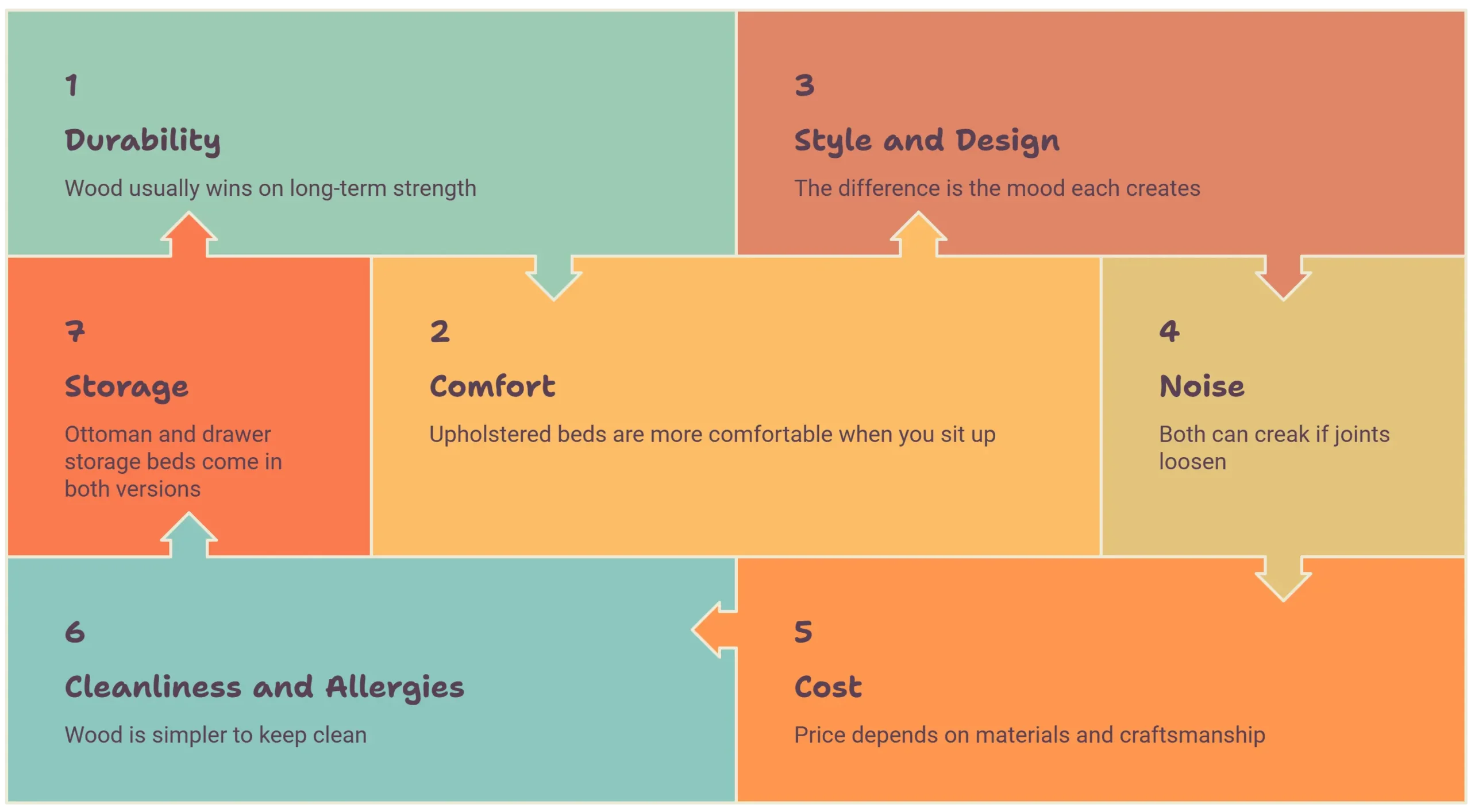
Wood usually wins on long-term strength. Furniture makers and retailers commonly describe solid hardwood as the longest-lasting choice. No independent study gives a fixed lifespan for either type, so treat any exact “years” figure with caution.
The fabric and padding age first on an upholstered bed. The inner frame can be just as strong as a wooden one. A well-built upholstered bed on a solid timber frame can outlast a poorly made wooden bed.
Comfort
Upholstered beds are more comfortable when you sit up. The padded headboard supports your back. Wooden headboards feel firmer. A few good pillows solve most of that.
Both types support a mattress equally well if the slats are sound. Check slat spacing against your mattress maker’s guidance. Some warranties set slat gap limits.
Style and Design
The difference is the mood each creates.
- Wooden beds suit natural, classic, rustic and Scandinavian rooms. They also work in sleek modern spaces.
- Upholstered beds suit boutique, hotel-style and luxury interiors. They pair well with layered textiles.
A simple rule is balance. A room full of soft fabrics can handle a wooden frame. A room with hard floors and plain walls often benefits from a padded headboard.
Noise
Both can creak if joints loosen. Tight bolts keep either type quiet. Padding can also soften the sound of a headboard touching the wall.
Cost
Price depends on materials and craftsmanship, not only the type. Solid hardwood and premium fabrics both cost more. Compare the price against how long you plan to keep the bed.
Cleanliness and Allergies
Wood is simpler to keep clean because dust sits on the surface and wipes off. Fabric needs more frequent vacuuming. If someone at home has allergies, a smooth wooden frame or a tightly woven, easy-clean fabric is the easier route. Ask your GP for medical advice.
Storage
Ottoman and drawer storage beds come in both wood and upholstered versions. Check how heavy the base is to lift and what weight the mechanism supports before you buy.
Upholstered Headboard vs Wooden Headboard
You can also compare only the headboard.
An upholstered headboard is softer and warmer. It suits people who read in bed. A wooden headboard is firmer and easier to clean. It suits people who want low maintenance.
Some frames let you choose the headboard separately from the base. This lets you get the look you want without committing to a fully fabric bed.
How to Maintain a Wooden Bed Frame
 Wooden beds need little care. A few habits help them last.
- Dust weekly. Use a soft dry or slightly damp cloth.
- Avoid harsh cleaners. Strong chemicals can dull the finish.
- Tighten bolts and joints. Check every few months to stop creaking.
- Keep it out of direct sun. Sunlight can fade or dry the timber.
- Watch room humidity. Very damp or very dry air can stress wood.
- Follow the finish instructions. Oiled, waxed and lacquered woods need different care.
- Use felt pads on the feet. They protect floors and reduce movement.
How to Maintain an Upholstered Bed
Upholstered bed maintenance is more hands-on. A simple routine keeps it easy.
- Vacuum monthly. Use a soft brush attachment on the headboard and sides.
- Treat spills fast. Blot, don’t rub. Rubbing pushes the stain deeper.
- Read the care label. It tells you whether to use water or a solvent. Test any cleaner on a hidden spot first.
- Plump padded areas. This helps the padding keep its shape.
- Keep pets away from the headboard. Claws pull threads.
- Avoid direct sun. UV light can fade colour.
- Consider performance fabric. Stain-resistant finishes make daily life easier.
For deep cleaning, use a professional upholstery cleaner if the fabric is delicate, such as velvet.
Best Fabric for Bed Frames
Fabric matters as much as the frame. These are the best fabric bed frames options to consider.
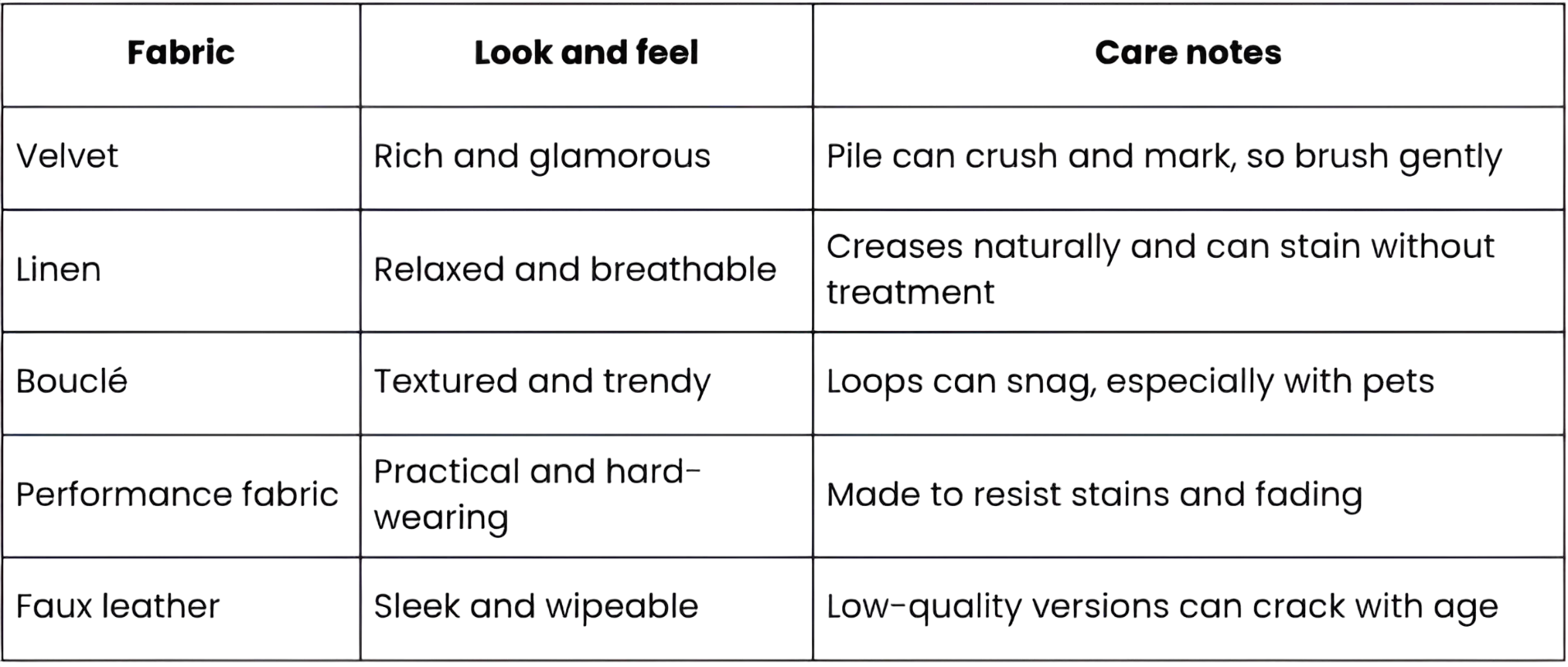 Ask the seller for the fabric’s abrasion rating. Furniture makers often test this with the Martindale method. A higher rating generally means better resistance to wear.
Wooden vs Upholstered Bed Frame UK: Fire Safety Rules
UK buyers should know about fire safety law. Many guides skip it.
Upholstered furniture sold in the UK must meet the Furniture and Furnishings (Fire) (Safety) Regulations 1988. According to Business Companion, the Chartered Trading Standards Institute’s guidance for businesses, these rules cover the flammability of upholstered furniture, including beds. The regulations were amended in October 2025, as confirmed by UL and Business Companion.
In plain terms:
- Filling materials must meet set ignition tests.
- Upholstery composites must resist cigarettes.
- The first UK supplier must keep compliance records for five years.
Mattresses and bed bases are handled by separate standards, such as BS 7177.
Landlords and property developers: the rules also apply to upholstered furniture supplied in rented homes. Buy from a seller who can show compliance. For the latest legal detail, check legislation.gov.uk or contact your local Trading Standards office.
Best Bed Frame Material for Different Buyers
No single material is best for everyone. Here is how it breaks down by buyer.
- Families with young children: solid wood. It handles knocks and wipes clean.
- Pet owners: wood, or a tightly woven performance fabric.
- Luxury and design lovers: upholstered, with a statement headboard in premium fabric.
- Landlords and property developers: hard-wearing wood or stain-resistant fabric that meets UK fire rules.
- First-time buyers: the best build quality your budget allows. Don’t trade frame strength for a trendy finish.
- Small bedrooms: light wood or a slim padded headboard.
- Anyone who reads or works in bed: an upholstered headboard.
How to Choose a Bed Frame: A Simple Checklist
Use this list before you buy.
- Check the construction. Ask what the frame is made of, not only how it looks.
- Measure your room. Leave space to walk around the bed and open doors and drawers.
- Match the mattress. Confirm size and the base type your mattress needs.
- Test the slats. Look for sturdy, well-spaced slats, with centre support on larger sizes.
- Think about daily habits. Pets, children and breakfast in bed all change the best choice.
- Ask about warranty. A longer guarantee shows confidence in the build.
- Plan delivery and assembly. Large beds are heavy and awkward to build.
- See it in person if you can. Fabric colour and wood tone look different on screen.
You can browse designer beds and bedroom furniture at Designer Furniture Gallery to compare finishes and styles before you decide.
Final Verdict: Wooden or Upholstered?
Choose a wooden bed frame if you want long-lasting strength, simple care and a timeless look.
Choose an upholstered bed if you want comfort, softness and a luxury feel, and you accept a little more upkeep.
Can’t decide? Pick a solid timber frame with an easy-clean upholstered headboard. You get the strength of wood and the comfort of fabric.
Frequently Asked Questions
1. Is an upholstered bed better than a wooden bed?
Not always. Upholstered beds are better for comfort and soft style. Wooden beds are better for durability and easy cleaning. Pick based on your lifestyle.
2. Do upholstered beds last as long as wooden beds?
Usually not. The frame inside can be just as strong. The fabric and padding wear out sooner. Good fabric and regular care help.
3. Are upholstered beds hard to clean?
They need more effort than wood. Vacuum monthly and treat spills straight away. Stain-resistant fabric makes the job easier.
4. What is the best fabric for an upholstered bed frame?
Performance fabrics are the most practical for busy homes. Velvet and linen look great but need more care. Check the Martindale abrasion rating.
5. What are the disadvantages of a wooden bed frame?
The headboard is firm, the style can feel heavy, and solid wood can cost more. Joints may creak if they loosen.
6. Which bed frame material is best for allergies?
A smooth wooden frame is simplest to wipe clean. A tightly woven, easy-clean fabric is another option. Ask a GP for medical advice.
7. Can I reupholster an upholstered bed?
Yes, in most cases. A professional upholsterer can replace the fabric and padding. Cost depends on size and design.
8. Is the wooden vs upholstered bed frame choice different in the UK?
The style choice is the same. The main UK difference is safety law. Upholstered beds sold in the UK must meet fire safety regulations, so buy from a trusted supplier.


