



Wooden Furniture Care: How to Prevent Scratches, Heat Marks and Sun Damage

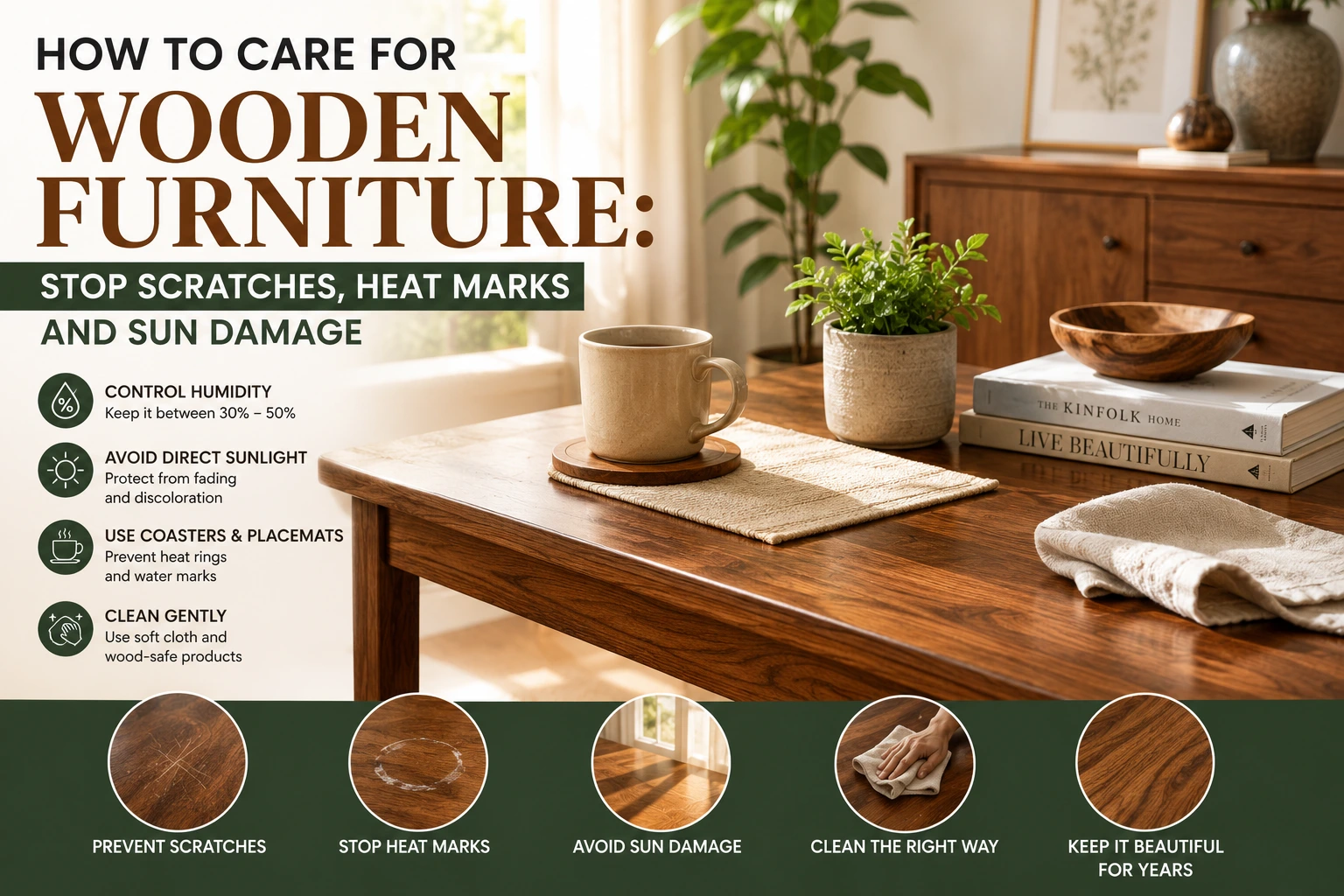
Wooden furniture needs three things to stay in good shape. It needs steady humidity. It needs protection from heat and sun. It needs the right cleaning products.
Solid wood reacts to its surroundings, unlike laminate or engineered wood, which stay mostly fixed in shape. A hot mug can leave a ring. Strong sunlight can fade the colour. Dry winter air can cause cracks.
Most damage to wood furniture is not bad luck. Most damage happens because the wood sits in the wrong spot, or gets cleaned the wrong way.
The good news is simple. A few small habits protect wood furniture for years. This guide covers all three care habits in plain steps. It also shows how to fix scratches, stains, and mold when they do happen.
Table of Contents
- How Do You Take Care of Wooden Furniture?
- Why Does Solid Wood Furniture Need Different Care Than Other Materials?
- What Humidity Level Is Best for Wooden Furniture?
- Why Should You Use Coasters and Placemats on Wood Furniture?
- Does Direct Sunlight Damage Wood Furniture?
- How Should You Dust and Clean Wood Furniture?
- How Do You Clean Wood Furniture Without Damaging the Finish?
- How Do You Clean Mold Off Wood Furniture?
- How Do You Remove Stains From Wood Furniture?
- How Do You Fix Scratches on Solid Wood Furniture?
- What Is the Seasonal Wood Furniture Maintenance Checklist?
- What Type of Wood Furniture Is Easiest to Maintain Long-Term?
- Key Takeaways
- Frequently Asked Questions
How Do You Take Care of Wooden Furniture?
Wooden furniture care comes down to four simple habits.
- Keep indoor humidity between 30% and 50%.
- Keep wood furniture away from direct sunlight.
- Keep hot objects, like mugs and plates, off wood surfaces.
- Clean wood only with a soft cloth and wood-safe products.
Get these four habits right, and a well-made piece can last for years without cracking, fading, or warping. The sections below break down each habit in plain steps, plus how to fix common damage like scratches, stains, and mold when it happens.
Why Does Solid Wood Furniture Need Different Care Than Other Materials?
Solid wood behaves differently from laminate, veneer, or engineered wood. Four traits explain why:
- It absorbs moisture. Wood pulls moisture from the air. Wood also releases moisture back into the air. This process is called being “hygroscopic.” On average, wood gains or loses about 1% moisture content for every 5% change in relative humidity, according to woodworking researcher Nick Engler.
- It reacts to sunlight. UV rays break down the wood’s finish over time. UV rays also fade the wood’s natural colour.
- It reacts to heat. A hot mug or plate can cloud the finish. A hot surface can crack the finish if left too long.
- It absorbs spills. Wood is porous. Spilled liquid can sink into unsealed wood within minutes.
Most damage to solid wood furniture is not bad luck. Most damage happens because the wood was placed in the wrong environment. Understanding these four traits is the first step to protecting any solid wood piece for the long term.
What Humidity Level Is Best for Wooden Furniture?
The best indoor humidity level for wooden furniture is 30% to 50%. This range matches the moisture level wood already has when it leaves the factory.
Furniture-grade wood is kiln-dried before sale. Kiln-drying brings the wood’s moisture content down to 6–8%. This 6–8% level matches a normally heated or cooled home, according to the USDA Forest Products Laboratory.
When indoor humidity swings far outside 30–50%, the wood reacts. Wood absorbs extra moisture when the air is too humid. Wood releases moisture and shrinks when the air is too dry. This uneven movement causes warping. It also causes cracking. It can loosen glued joints over time.
Use these four steps to protect the humidity balance:
- Buy a hygrometer to track indoor humidity.
- Run a humidifier during dry winter months.
- Run a dehumidifier or air conditioner during humid months.
- Keep furniture at least a few inches away from radiators and vents.
Why Should You Use Coasters and Placemats on Wood Furniture?
Coasters and placemats stop heat rings and white marks from forming on wood furniture.
 This single habit prevents most of the white haze marks people see on dining tables and coffee tables. A hot mug softens the finish and opens tiny pores in the surface, according to Better Homes & Gardens. As the finish cools and re-hardens, it traps moisture inside, which is what creates the white ring.
Does Direct Sunlight Damage Wood Furniture?
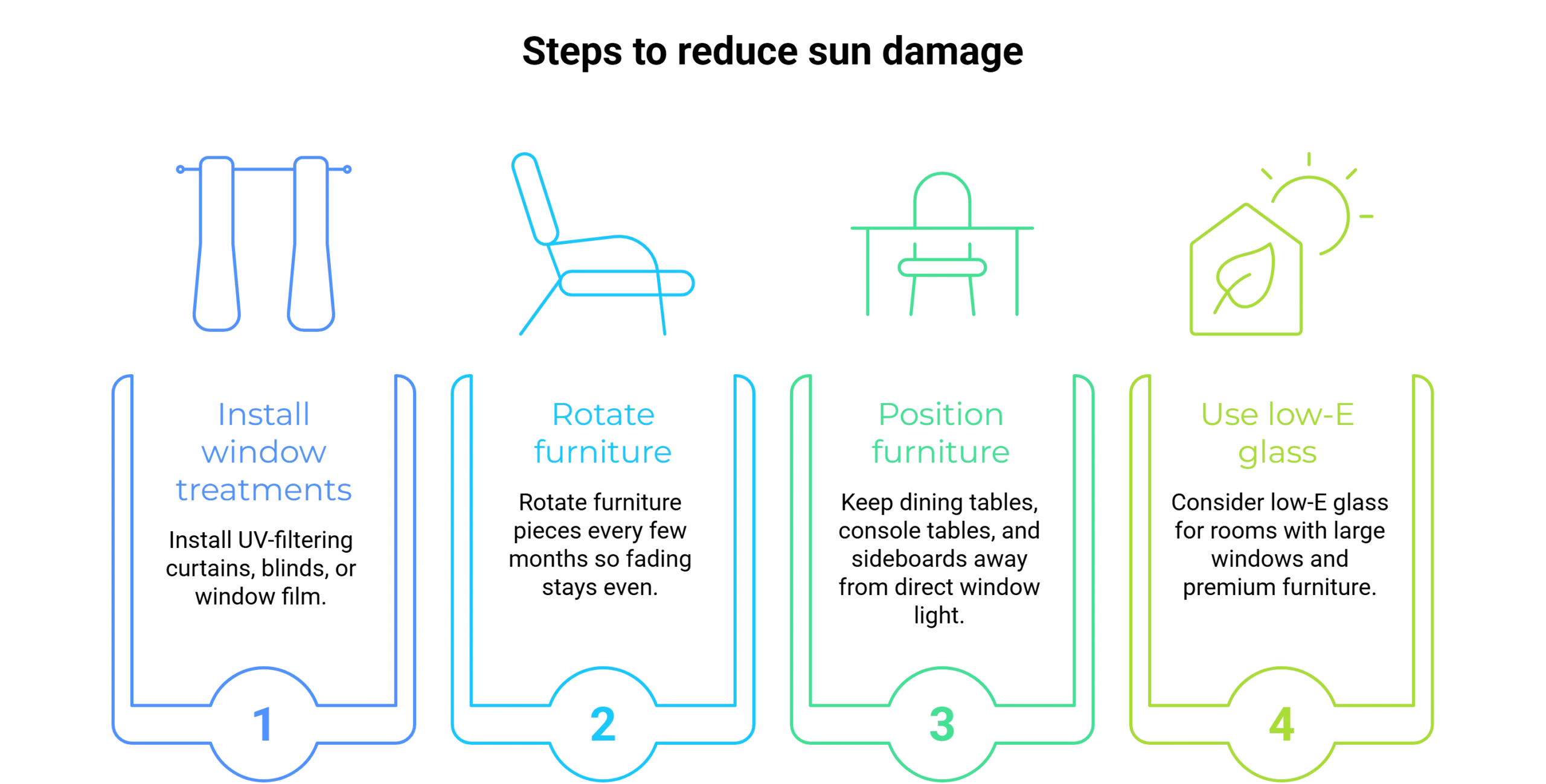
Yes, direct sunlight damages wood furniture. UV radiation causes about 40% of fading damage to indoor furniture. Visible light causes another 25% of fading damage, according to research from the Florida Solar Energy Center.
Wood finishes break down when exposed to UV rays. Wood pigments also break down when exposed to UV rays. This creates patchy discoloration, especially near south-facing or west-facing windows.
How Should You Dust and Clean Wood Furniture?
Dust wood furniture with a soft microfiber cloth, not a feather duster. A feather duster just moves dust around instead of removing it. Research comparing cleaning cloths has found microfiber removes up to 99% of surface contamination, compared to 40–50% for feather dusters.
Dust particles are mildly abrasive. Left alone, dust particles create tiny scratches every time something brushes against the surface.
Follow these four rules for daily and weekly cleaning:
- Wipe in the direction of the wood grain, never in circles.
- Avoid silicone-based sprays. Silicone sprays build up residue over time.
- Silicone residue also makes future refinishing harder.
- Deep clean once a month with a wood-safe cleaner, then dry the surface right away with a separate dry cloth.
What Is the Safest Method for Cleaning Wood Furniture Finishes?
Most wood furniture only needs a damp cloth followed by a dry cloth. Harsh chemicals cause most finish damage during routine cleaning. Excess water causes the rest of the damage.
Follow these five steps for a safe routine clean:
- First, clean off any surface dust with a dry microfiber cloth.
- Lightly dampen a second cloth with water or a wood-specific cleaner.
- Wipe with the grain, using light pressure.
- Dry the surface immediately with a clean, dry cloth. Never let moisture sit on wood.
- Apply furniture wax or polish every 3 to 6 months to protect the finish.
Which Cleaning Method Works Best for Each Type of Wood Furniture?

How Do You Clean Mold Off Wood Furniture?
To clean mold off wood furniture, move the piece outside, vacuum the loose spores, then wipe the surface with mild soap and water or diluted white vinegar. Mold can start forming on wood within 24 to 48 hours. This happens once indoor humidity stays above 60%. The U.S. Environmental Protection Agency (EPA) advises maintaining indoor humidity below 60%. The EPA recommends 30% to 50% as the ideal range.
Follow these six steps to remove mold safely:
- Move the furniture outdoors or to a well-ventilated room.
- Wear gloves and a mask. Mold spores can irritate skin and lungs.
- Vacuum loose mold spores with a soft brush attachment.
- Wipe the surface with mild soap and water. Use diluted white vinegar for tougher spots.
- Dry the piece completely before moving it back indoors.
- Apply a wood-safe mold inhibitor if the problem has come back before.
Keep humidity below 60% after cleaning to stop mold from returning. Improve airflow around any furniture placed against exterior walls.
How Do You Remove Stains From Wood Furniture?
Most surface stains can be fixed at home without professional refinishing, if caught early.

Always test any stain-removal method on a hidden spot first. Try the underside of a tabletop. Try the back of a drawer. Finishes react differently depending on the wood’s age and sealant type.
How Do You Fix Scratches on Solid Wood Furniture?
Light scratches only affect the finish, not the wood itself. This makes most scratches fixable without professional refinishing.
- Light scratches: Rub a walnut or a matching wood-tone crayon along the scratch. Buff with a soft cloth afterward.
- Medium scratches: Use a wood touch-up marker matched to the furniture’s stain colour.
- Deep scratches: Fill the scratch with wood filler. Sand lightly with 220-grit sandpaper once dry. Reapply stain and a protective topcoat.
- Multiple scratches on an older piece: Book a professional refinish instead of doing spot repairs. This matters most for statement pieces or heirloom furniture.
What Is the Seasonal Wood Furniture Maintenance Checklist?
| Season | Priority Task |
| Spring | Check for winter dryness cracks. Apply conditioning oil or wax. |
| Summer | Monitor indoor humidity. Keep furniture away from strong sun exposure. |
| Autumn | Inspect joints before the heating season starts. Tighten any loose hardware. |
| Winter | Run a humidifier. Keep furniture away from radiators and fireplaces. |
What Type of Wood Furniture Is Easiest to Maintain Long-Term?
Kiln-dried solid hardwood, with a lacquer or polyurethane finish and mortise-and-tenon joinery, is the easiest type of wood furniture to maintain long-term. The furniture you choose at purchase time decides how much maintenance it needs later.
- Choose kiln-dried hardwood. Kiln-dried hardwood is more dimensionally stable than air-dried wood.
- Check the finish type. Lacquer and polyurethane finishes resist spills well. Oil finishes look richer but need conditioning more often.
- Choose solid wood over veneer for daily-use pieces, like dining tables that see heavy traffic every day.
- Check the joinery. Mortise-and-tenon joints hold up better over time than glued butt joints. Dovetail joints also hold up better than glued butt joints.
Final Thoughts
Wood furniture stays in better condition with four simple care habits. Keep indoor humidity between 30% and 50%. Keep heat and direct sunlight off the surface. Clean with the right products, not whatever is under the sink. Fix scratches and stains early, before they set in.
These habits work best together. A dry, humidity-safe room still needs coasters, because heat rings form no matter how balanced the air is. A well-dusted table still needs sun protection, because sunlight fades wood even in a dry room.
Most fixes in this guide are quick. Mayonnaise lifts a water ring. Cornstarch lifts a grease spot. A warm iron softens a heat mark. Most of these repairs take under 30 minutes.
Well-cared-for solid wood furniture can last for decades, often passed down between generations. Furniture that is not cared for can look worn within just 2 to 3 years.
If you’re shopping for new pieces, you’ll find a wide range of solid wood furniture at Designer Furniture Gallery in Thurrock.
Key Takeaways
- Keep indoor humidity between 30% and 50% to stop warping and cracking.
- Use coasters, placemats, and trivets every time, without exception.
- Keep wood furniture out of direct sunlight to prevent fading.
- Dust weekly with a soft microfiber cloth, always along the grain.
- Deep clean and wax or polish every 3 to 6 months.
- Keep humidity below 60% to stop mold from forming.
- Fix scratches and stains early, before they set into the finish.
- Choose kiln-dried solid wood with strong joinery for the lowest long-term maintenance.
Frequently Asked Questions
1.How often should I clean my wooden furniture?
Dust wood furniture every week. Deep clean with a wood-safe polish every 3 to 6 months. Dining tables in high-traffic areas may need attention more often than once a week.
2.Can I use olive oil to clean wood furniture?
Olive oil is generally not a suitable choice for wood furniture care. Olive oil can turn rancid over time. Rancid oil also attracts dust. Use a dedicated wood conditioner instead.
3.Is Vinegar a Good Choice for Cleaning Wood Furniture?
Diluted white vinegar is safe on sealed, finished wood for grease or grime. Avoid vinegar on antique, unsealed, or delicate finishes, since it can dull the surface.
4.How do I stop wood furniture from cracking in winter?
Winter cracking usually comes from low indoor humidity. Run a humidifier to maintain 30-50% relative humidity. This routine helps keep the wood from drying out and splitting over time.
5.Can mold on wood furniture be permanently removed?
Surface mold is often removable using the right cleaning method. The furniture must stay in a low-humidity room afterward. Mold spores need moisture to regrow, so humidity control prevents it from coming back.
6.What’s the difference between wood polish and wood wax?
Wood polish adds shine and a light protective layer for regular use. Wood wax adds a thicker, longer-lasting protective coat. Wax suits furniture that does not get frequent reapplication.