



Leather vs fabric chair for your designer chair: pros, cons and how to decide

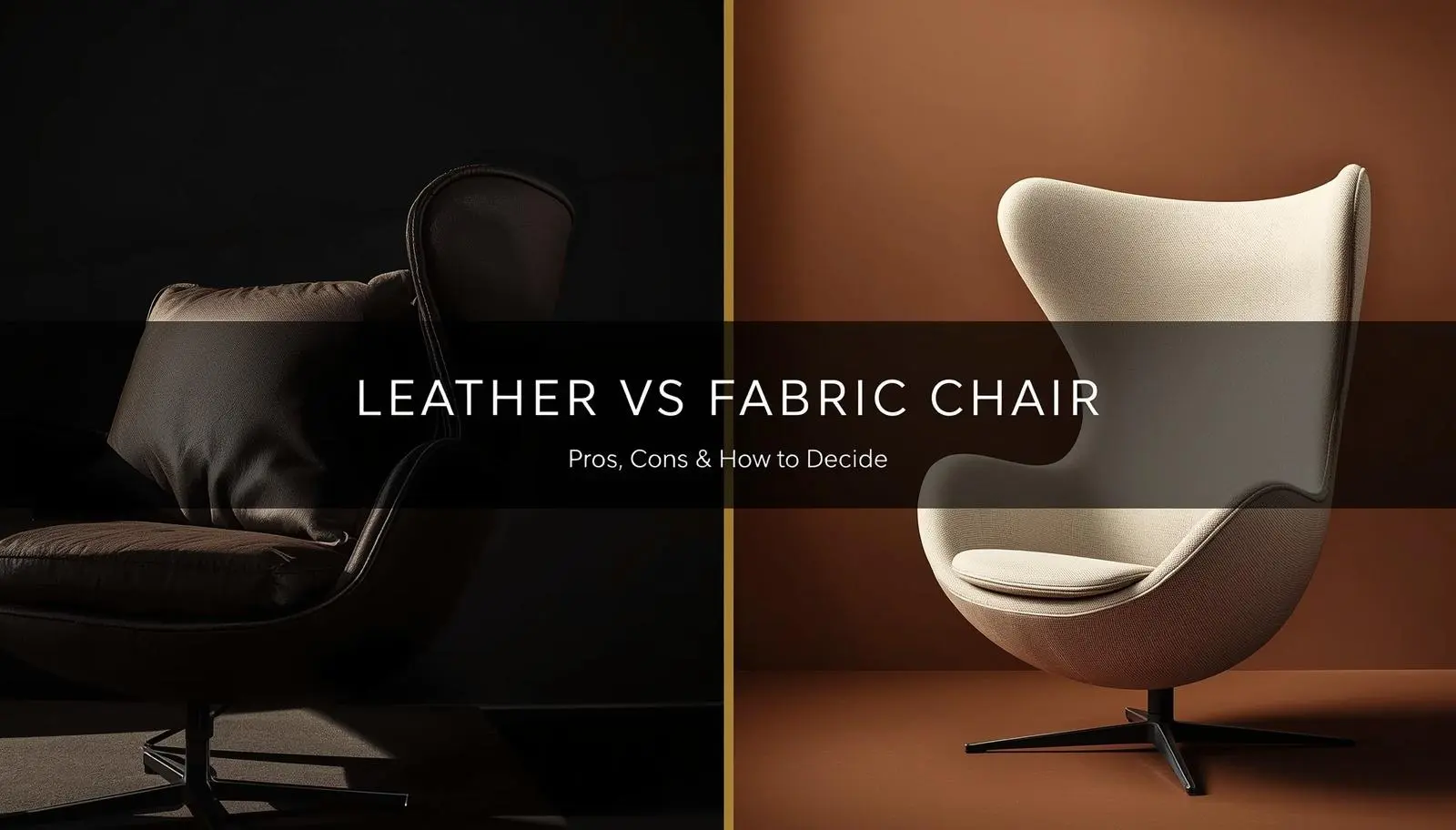
Choosing between a leather vs fabric chair can change how your home feels every day. The material affects comfort, cleaning, appearance, and how well the chair ages over time. Many buyers focus on shape first, but the upholstery often matters just as much after the chair is in daily use.
Leather is better for durability and easier cleaning.
Fabric is better for softness and design variety.
The right option depends on your home, pets, budget, and how often the chair will be used.
This guide explains the leather vs fabric chair pros and cons in simple terms so you can choose with confidence.
Leather Chair vs Fabric Chair: Key Differences
Before comparing comfort or price, it helps to understand what each material really is. A leather vs fabric chair comparison starts with the material itself.
What is a Leather chair
A leather chair uses treated animal hide. The best types are:
- Full-grain leather
- Top-grain leather
These are often called quality leather because they last longer and develop a natural finish with age. Some cheaper chairs use PU leather. PU leather is a synthetic layer placed over fabric. It can look similar at first but usually wears faster.
According to the Leather Working Group, higher-grade leather can stay in good condition for many years when maintained properly.
What is a Fabric chair
A fabric chair uses woven materials such as:
- cotton
- velvet
- polyester
- linen
- boucle
- chenille
Fabric offers more colour and texture choices, but durability depends on the weave and stain protection used by the manufacturer.
Leather vs Fabric Chair Comparison
A side-by-side comparison makes the choice easier.
| Category | Leather Chair | Fabric Chair |
| Advantages | Easy to clean; long-lasting; hypoallergenic; develops patina; premium look | Comfortable, available in many colours and textures, breathable, budget-friendly, and ideal for a cosy feel |
| Maintenance | Low upkeep; needs occasional conditioning | Needs regular cleaning; stains may need deep clean |
| Durability | Very durable; lasts longer | Moderate; wears out faster |
| Comfort | Firm at first; softens over time | Soft and comfortable from day one |
| Temperature | Can feel cold or sticky | Breathable and stable |
| Allergy | Does not trap allergens | Traps dust and pet hair |
| Style | Sleek; limited colours | More variety and flexibility |
| Pets | Scratches easily | Holds hair but hides scratches better |
| Spills | Wipe clean easily | Absorbs and stains quickly |
| Sunlight | More fade-resistant | Fades faster |
| Cost | Expensive upfront | More budget-friendly |
| Best For | Formal, modern spaces | Relaxed, cosy spaces |
This table helps explain the main leather vs fabric chair pros and cons for everyday buyers.
Fabric Sofa vs Leather Sofa With Pets
Many homeowners ask about fabric sofa vs leather sofa with pets before buying furniture. The best material depends on the type of pet.
If you have cats
Fabric usually works better because:
- claws can scratch leather easily
- marks stay visible on leather
- woven fabric can hide small damage better
If you have dogs
Leather usually works better because:
- hair does not stick as much
- muddy paws wipe away faster
- odours absorb less into the surface
A study from the American Kennel Club notes that smooth surfaces often collect less pet hair than textured upholstery, making cleaning easier for dog owners.
The safest option is genuine leather, not PU leather, because synthetic surfaces can peel faster with repeated scratching.
How to Clean a Leather Chair – Quick Guide
Proper care can make a leather chair last much longer. Some well-maintained leather furniture can last 15 to 20 years.
According to Furniture Industry Research Association guidance, regular maintenance improves upholstery lifespan.
Follow these simple steps
- Wipe dust weekly with a soft cloth
- Clean spills immediately
- Use leather conditioner 2–3 times each year
- Keep the chair away from direct sunlight
- Avoid strong household cleaners
Many buyers also search how to clean a leather sofa, and the same care method works for most leather seating.
For fabric chairs:
- vacuum weekly
- spot clean stains quickly
- steam clean every few months
How to Decide: A Simple Decision Framework
Choosing between a leather and fabric chair becomes easier when you ask the right questions.
- Do you have pets or children?
Choose fabric if:
- you have cats
- scratches are a concern
Choose leather if:
- you have dogs
- quick cleaning matters
- How long should the chair last?
Choose leather if:
- you want a long-term investment
- daily use will be heavy
Choose fabric if:
- the chair is temporary
- style matters more than lifespan
- How warm is the room?
Choose fabric if:
- the room gets warm often
Choose leather if:
- the room stays cool year-round
- How much cleaning do you want?
Choose leather if:
- you prefer simple cleaning
Choose fabric if:
- you do not mind regular maintenance
Where to Buy a Leather Chair in the UK
When you plan to buy a leather chair, check these three things first.
Look for:
- genuine leather grade
- solid wood frame
- clear material details
Designer Furniture Gallery is one of the most trusted places to explore and buy furniture. It offers both leather and fabric seating for UK homes, making comparison easier before buying.
Final Thoughts
The leather vs fabric chair decision depends on how you live, not just how the chair looks in a showroom. Leather offers easier cleaning, longer life, and a timeless finish. Fabric offers comfort, warmth, and more freedom in colour and texture.
For busy homes, leather often feels more practical. For softer living spaces, fabric often feels more inviting. Neither material is right for every person.
The best chair is the one that fits your room, your routine, and your daily life. When the material matches the way you live, the chair usually feels right for years.
FAQs
1.Which lasts longer – a leather chair or a fabric chair?
A leather chair usually lasts longer than a fabric chair. Genuine leather can stay in good condition for 15 to 20 years when it is cleaned and conditioned properly. Fabric can still last for years, but daily use often causes fading, sagging, or wear much sooner. The final lifespan depends on the quality of the material and how often the chair is used.
2.Is leather or fabric better for UK homes?
Fabric often feels warmer in UK homes, especially during colder months when rooms can feel cool. Leather also works well in UK interiors because it is easier to wipe clean and holds its appearance for longer. The better option depends on whether comfort or low maintenance matters more in your home.
3. Is a leather chair or fabric chair better with pets?
For cats, fabric usually works better because scratches are less visible on textured surfaces. For dogs, leather is often easier to clean because fur and muddy marks do not cling as easily. If you have pets, the best choice depends on the type of animal and how active they are around furniture.
4. How is PU leather different from real leather?
Real leather comes from animal hide, while PU leather is a synthetic material made to look similar. Genuine leather usually lasts much longer and develops a softer finish over time. PU leather costs less at first, but it can crack or peel after regular use. Checking the material label before buying can help avoid confusion.
5. Can you clean a leather chair at home?
Yes, a leather chair can be cleaned at home without much difficulty. Wipe the surface weekly with a soft dry cloth and clean spills as soon as they happen. Applying leather conditioner a few times each year helps keep the material soft. Simple care can keep the chair looking good for much longer.
6. Is a fabric egg chair good for a living room?
Yes, a fabric egg chair can work very well in a living room. The soft upholstery gives the chair a warmer and more relaxed feel. It also blends nicely with cushions, rugs, and other soft furnishings. Many homeowners choose it as a statement piece for reading corners or quiet spaces.
7. Which is more comfortable – leather or fabric?
Fabric usually feels softer from the first day, which makes it comfortable for longer sitting. Leather can feel firmer at first, but it often becomes softer with regular use. Some people prefer fabric for immediate comfort, while others like how leather adjusts over time.
8. How can I identify quality leather?
You can identify quality leather by checking a few simple details. Look for full-grain or top-grain leather because these are stronger and last longer. Good leather usually has a natural texture instead of a perfectly smooth surface. It should also have a light natural smell rather than a plastic smell. Asking the seller about the leather grade can also help confirm the quality.