



Wardrobe Ideas for Small Bedrooms: Space-Saving Designs That Actually Work

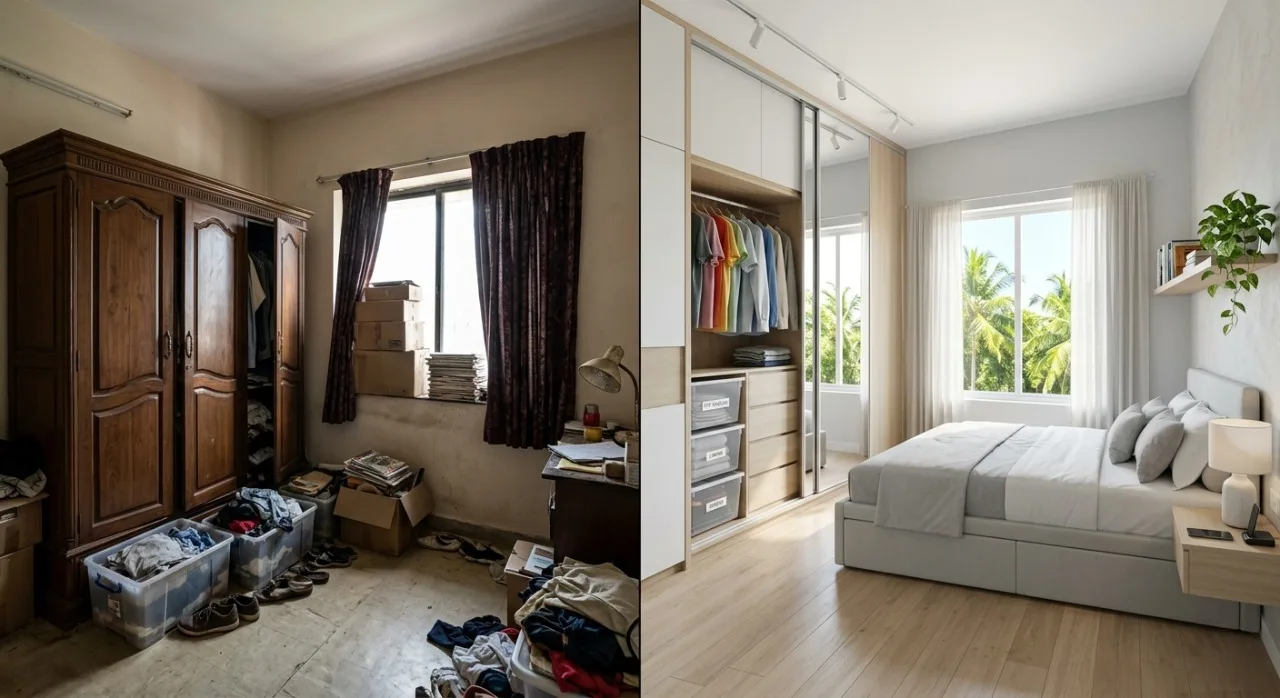
Finding the right wardrobe ideas for small bedrooms can be challenging when space is limited. You need enough storage for clothes without making the room feel cramped or blocking movement.
The good news? With the right wardrobe design, size, and placement, even the smallest bedroom can feel organised, open, and functional.
Based on our experience furnishing compact bedrooms, this guide covers the best wardrobes for small bedrooms, layout strategies, and smart storage ideas to help you maximise every centimetre of space.
Best Wardrobe Ideas for Small Bedrooms (Quick Answer)
- Sliding wardrobes save floor space
- Fitted wardrobes maximise storage
- Slim wardrobes (45–50cm depth) fit compact rooms
- Corner wardrobes use unused space efficiently
Why Choosing the Right Wardrobe Matters in a Small Bedroom
In a small room, the wrong wardrobe can:
- Block natural light
- Restrict movement
- Make the room feel smaller
The right wardrobe should optimise:
- Depth: Standard is 60cm, but 45–50cm works better in compact rooms
- Door type: Sliding doors save space vs hinged
- Height: Floor-to-ceiling designs maximise vertical storage
- Placement: Affects how open the room feels
A well-chosen wardrobe can make a small bedroom feel significantly bigger.
How to Fit a Wardrobe in a Small Bedroom (Step-by-Step)
Step 1: Measure Your Space Carefully
- Measure wall width and available depth
- Account for doors, windows, sockets, and radiators
- Leave:
- 60–90cm clearance for hinged doors
- 30cm clearance for sliding wardrobes
Step 2: Choose the Best Wall
Ideal wardrobe placement:
- Opposite the bed (keeps walkway clear)
- Along the longest wall
- Inside alcoves (perfect for fitted wardrobes)
Avoid placing wardrobes next to windows to prevent blocking light.
Step 3: Choose the Right Wardrobe Type
Your layout should dictate your wardrobe choice — not just aesthetics.
(See best types below 👇)
Step 4: Optimise Internal Storage
A smart interior increases storage capacity without increasing size:
- Double hanging rails
- Built-in drawers
- Adjustable shelves
- Shoe compartments
Best Wardrobe Types for Small Bedrooms
Not all wardrobes are built the same. These are the types that work best in smaller rooms.
Sliding Door Wardrobes
This is the most popular choice for a wardrobe in a small bedroom — and for good reason. Sliding doors move along a track instead of swinging outward, which saves floor space in front of the wardrobe.
They work especially well:
- In bedrooms where space between the bed and the opposite wall is limited
- When you want a built-in or wall-to-wall look
- In modern or contemporary bedroom styles
Look for mirrored sliding doors — they reflect light around the room and make the space feel larger.
Fitted and Built-In Wardrobes
Fitted wardrobes are designed to fill a specific wall or alcove from floor to ceiling. They use every bit of available space — including awkward corners or sloped ceilings.
They’re a bigger investment than freestanding options, but they maximise storage and look clean and built-in. If your bedroom has an alcove or chimney breast recess, a fitted wardrobe is one of the smartest ways to use it.
Corner Wardrobes
If you have an empty corner taking up space, a corner wardrobe or L-shaped storage unit puts it to work. These use dead corner space that standard wardrobes can’t reach.
Some designs include a hinged door on one side and a sliding panel on the other. Others use a simple open shelving layout for easy access.
Small Freestanding Wardrobes
For very small rooms or rentals where you can’t fit anything permanent, a compact freestanding wardrobe is a practical option. Look for:
- Widths of 80–100cm for tight spaces
- Slim depth (45cm or less)
- Built-in drawers at the base
These take up less room but still give you dedicated clothing storage.
Wardrobe with Drawers
A small wardrobe with drawers built in is worth considering if you’re replacing both a wardrobe and a chest of drawers. Combining the two into one unit frees up floor space and reduces visual clutter in the room.
Small Bedroom Wardrobe Ideas — Smart Layout Tips
The wardrobe itself is only part of the solution. How you arrange the rest of the room matters too.
Use the Space Above the Wardrobe
The gap between the top of a wardrobe and the ceiling is often wasted. If your wardrobe doesn’t reach the ceiling, add open shelves or boxes above it for seasonal items — spare bedding, suitcases, or anything you don’t need daily.
Better still, choose a wardrobe that goes floor to ceiling. This removes the dead zone completely and gives you significantly more storage.
Pair the Wardrobe with an Ottoman Bed
If wardrobe space alone isn’t enough, an ottoman bed with under-bed storage is one of the most effective ways to add extra capacity in a small bedroom. The bed lifts up to reveal a storage space beneath — ideal for off-season clothes, extra bedding, or bulky items.
Add a Chest of Drawers Instead of a Second Wardrobe
Two wardrobes in a small room will almost always feel too heavy. Instead, use a chest of drawers for folded clothes and one wardrobe for hanging items. This gives you a better balance of storage without overcrowding the room.
Keep Colours Light
Light-coloured wardrobes — white, cream, or soft grey — reflect light and blend with walls, making the room feel more open. Dark finishes absorb light and can make a small room feel heavier. If you prefer a darker style, balance it with light walls and good lighting.
Closet Ideas for Small Bedrooms Without a Built-In Wardrobe
If you don’t have space for a full wardrobe:
- Open rails: Minimal and accessible
- Over-door organisers: Use vertical dead space
- Under-bed storage: Hidden and practical
- Floating shelves + baskets: Flexible and stylish
How to Choose the Right Wardrobe Size for a Small Bedroom
A quick reference guide to wardrobe sizing for small rooms:
 These are general guidelines. Your room’s specific layout — door positions, windows, and the bed size — will affect the best option for you.
Storage Ideas for Small Spaces Bedroom: Beyond the Wardrobe
If your wardrobe isn’t enough on its own, these storage ideas for small spaces in the bedroom can help.
- Bedside tables with drawers — store small items that would otherwise end up on the floor or in the wardrobe
- Blanket boxes at the foot of the bed — ideal for bulky bedding and out-of-season clothes
- Wall-mounted shelving — keeps items off the floor and creates a feeling of height
- Hooks behind doors — simple and space-free storage for bags, robes, and accessories
- Dressing table with storage — combine your vanity area with extra drawers
The goal in a small bedroom is to make every piece of furniture do more than one job. A bed with storage, a dressing table with drawers, and a wardrobe with built-in shelves together make a noticeable difference.
Final Thoughts
A small bedroom doesn’t limit your storage — poor planning does.
The best wardrobe ideas for small bedrooms focus on:
- Smart layout
- Space-saving designs
- Multi-functional furniture
The right wardrobe doesn’t just fit your room — it transforms how the space works. Focus on designs that maximise storage without compromising movement or light At Designer Furniture Gallery, you’ll find practical wardrobe solutions designed for real homes and compact spaces.
FAQ’S
1.What type of wardrobe is best for a small bedroom?
A sliding door wardrobe is usually the best choice. The doors don’t swing out, which saves floor space in front of the wardrobe. For rooms with an alcove, a fitted or built-in wardrobe is even better as it uses every available inch from floor to ceiling.
2.How much space do I need in front of a wardrobe?
For hinged doors, you need at least 60–90cm of clear space in front. For sliding doors, you only need around 30cm, which is why they work so well in tight rooms.
3.Can I fit a wardrobe in a bedroom that is under 3 metres wide?
Yes. Compact wardrobes are available from 80cm wide. Opt for a slim-depth model (45cm instead of the standard 60cm) and use a sliding door to keep the room feeling open.
4.What is the standard depth of a wardrobe?
The standard depth is 60cm, which allows clothes to hang without getting crushed. Slim wardrobes at 45–50cm depth are available and work well in very small rooms. They’re better suited to folded clothes and shelves rather than full-length hanging.
5.Is a wardrobe with drawers worth it for a small bedroom?
Yes. A small wardrobe with drawers built in combines two pieces of furniture into one. It frees up floor space and reduces the need for a separate chest of drawers — a real advantage when every square metre counts.
6.What colour wardrobe is best for a small bedroom?
Light colours — white, cream, or pale grey — work best. They blend with walls, reflect light, and help the room feel more open. Mirrored wardrobe doors are also a great option as they bounce light around the room.
7.How do I maximise storage in a small wardrobe?
Use every section of the internal layout. Look for wardrobes with double hanging rails, built-in shelves, shoe storage, and drawers. Add storage boxes or baskets on shelves and use the top shelf for items you don’t need regularly.
8.What is the difference between a fitted wardrobe and a freestanding wardrobe?
A fitted wardrobe is custom-built into a wall or alcove. It uses the full height and width of the space and looks seamless. A freestanding wardrobe is a standalone piece of furniture that can be moved. Freestanding options cost less and are better for renters, while fitted wardrobes maximise storage in a fixed space.