



How to Clean Wool Rug at Home: A Simple Care Guide

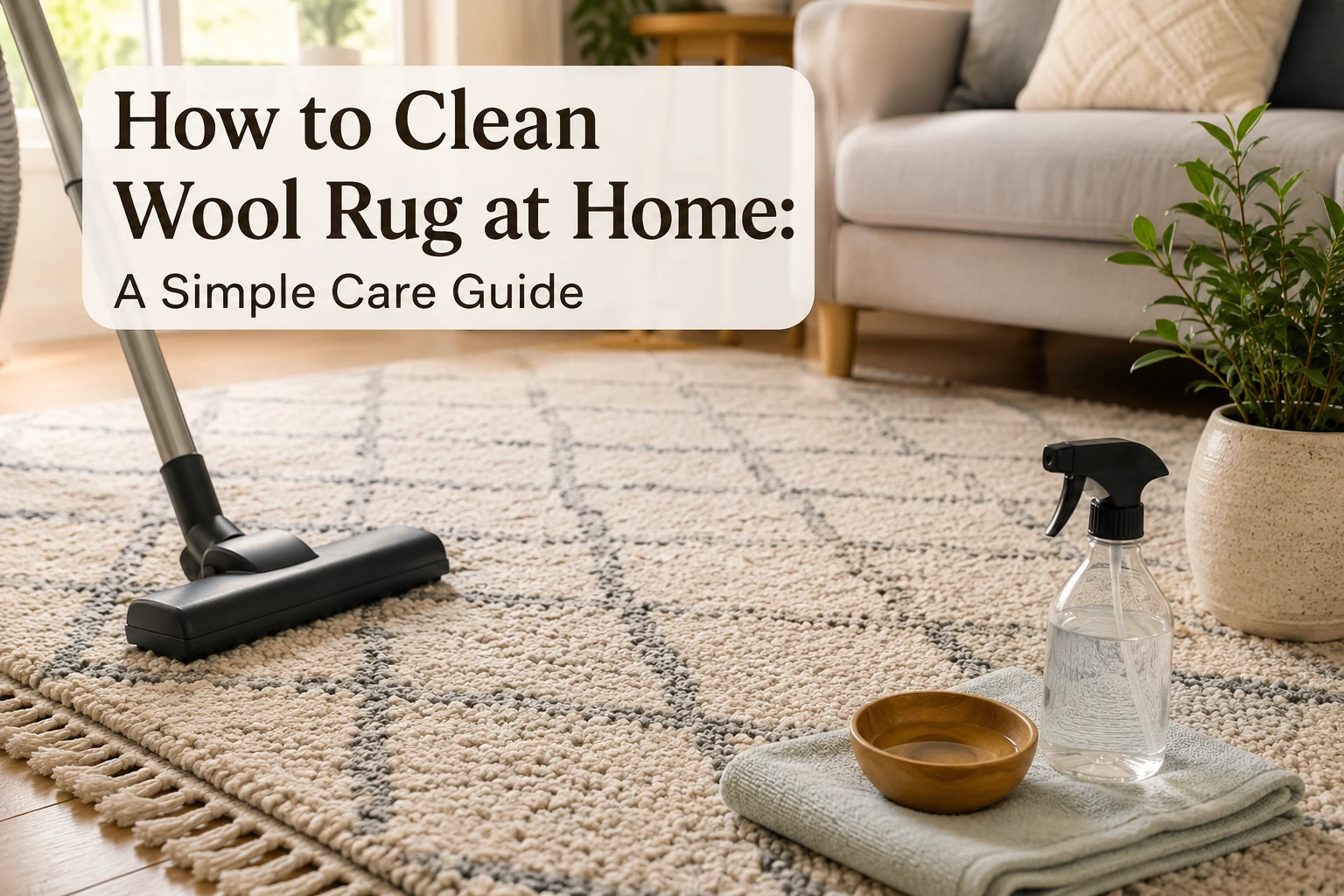
Vacuum wool rugs on a suction-only setting. Blot spills immediately instead of rubbing them. Treat spots with a mild, pH-neutral cleaner. That’s the direct answer to how to clean wool rug at home. Professional deep cleaning every 12-18 months protects the natural fibers long term. The Carpet and Rug Institute (CRI) confirmed this maintenance window in its 2024 care guidance.
Wool and synthetic rugs wear down differently under foot traffic, spills, and pets. Each fiber type offers a different level of durability and long-term support. If you’re searching for how to clean a rug without ruining it, start with the fiber type. This guide breaks down vacuuming, stain removal, deep cleaning, and everyday upkeep for both fiber types.
The best way to clean rugs made from wool comes down to one rule: less water, less heat, less scrubbing. A simple rug cleaning at home routine like this takes minutes, not hours, once it becomes a habit.
Table of Contents
- Why Wool and Synthetic Rugs Need Different Care
- Vacuuming Wool Rug: Step One in the Routine
- How to Remove Stains from Rug at Home
- Deep Cleaning: At Home vs. Professional Service
- Everyday Habits That Extend a Rug’s Life
- Wool vs. Synthetic Rug Cleaning: Quick Comparison
- Key Takeaways
- Frequently Asked Questions
Why Wool and Synthetic Rugs Need Different Care
Wool fiber and synthetic fiber react to water, heat, and cleaning products in opposite ways.
Wool rugs:
- Are coated in lanolin, a natural wax sheep produced.
- Repel dirt, oil, and moisture at the surface for the first few minutes after a spill.
- Absorb close to a third of their own weight in moisture without feeling wet, according to fiber research published by the International Wool Textile Organisation (IWTO).
- Can shrink, mat, or feel if soaked or steam-cleaned.
Synthetic rugs:
- Are usually made from polypropylene, polyester, or nylon.
- Resist moisture and stains at a chemical level, not a natural one.
- Tolerate deeper washing and faster drying than wool.
- Lack of wool’s self-renewing texture over time.
Treating a wool rug like a synthetic one is the single biggest mistake in rug care. Too much water or high heat breaks down the lanolin coating fast. Knowing how to clean wool rug at home is exactly what prevents that damage.
Vacuuming Wool Rug: Step One in the Routine
Vacuuming is the most effective daily habit for any rug, wool or synthetic. CRI’s 2024 guidance recommends three frequencies:
- Daily – high-traffic areas (entryways, hallways)
- Twice a week – medium-traffic areas (living rooms)
- Weekly – light-traffic areas (guest rooms)
How to Vacuum Wool Rug the Right Way
- Use a vacuum in suction-only mode, or turn off the rotating brush before cleaning.
- A rotating beater bar strips lanolin and frays wool fibers.
- Vacuum in the direction of the pile first, then lightly against the grain.
- Vacuum both sides every few months for flatweave or reversible rugs.
- Use the crevice tool on the fringe – never the brush roll. Brush rolls pull and unravel fringe threads.
Getting vacuuming wool rug technique right prevents most of the fiber damage a rug takes in a year.
Choosing the Best Vacuum for Wool Rugs: What to Look For

Synthetic rugs handle a rotating brush better than wool, so this same setup works for both fiber types.
How to Remove Stains from Rug at Home
Speed matters more than product choice. A spill left for 30 minutes settles far deeper into the pile than one blotted immediately. The Woolmark Company’s fiber-care research points to the same rule: fresh spills lift out far more easily than set-in ones.
Every method to remove stains from rug fibers starts the same way: blot first, never rub. Rubbing pushes the stain deeper and damages the pile structure.
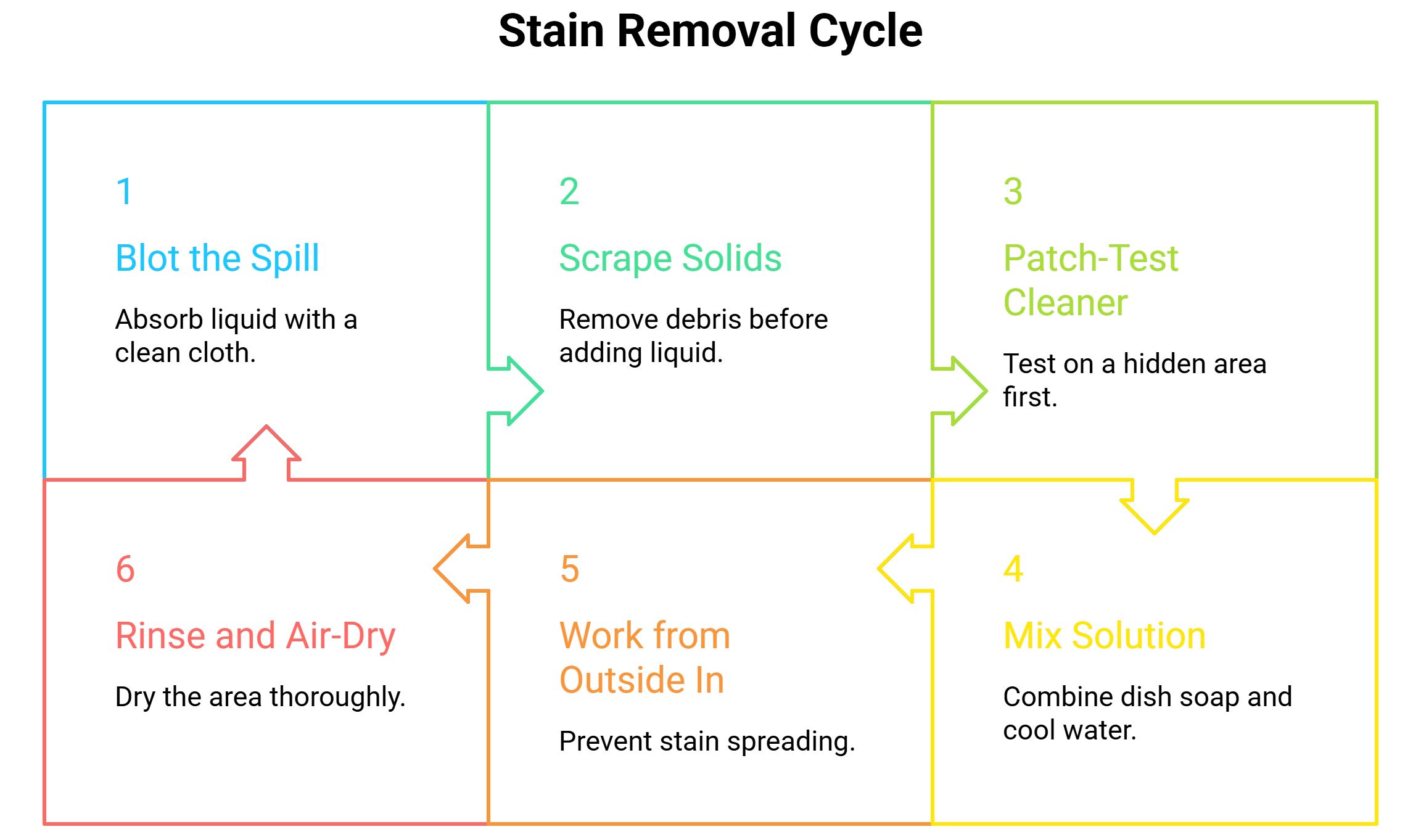
For wine, coffee, or pet stains, a mix of one part white vinegar to two parts water lifts color and neutralizes odor without bleaching wool’s natural tone.
Avoid these on wool:
- Ammonia-based or bleach-based cleaners
- Steam cleaners or high-heat extraction
- Excess water that soaks into the rug backing
- Scrubbing with a stiff brush
Deep Cleaning: At Home vs. Professional Service
Everyday spills only need the basics of how to clean wool rug at home. Deep cleaning is the next layer of care. CRI’s 2024 guidelines set that reset at every 12–18 months.

Rug cleaning at home works fine for everyday spills, but large or hand-knotted wool pieces need equipment built for rug-washing, not standard carpet machines.
Everyday Habits That Extend a Rug’s Life
Small, consistent habits protect a rug more than occasional deep cleaning ever will. CRI recommends rug pads made from felt or rubber for the best grip and cushioning.
- Rotate every 3–6 months so foot traffic and sunlight wear it evenly.
- Use a rug pad underneath to cut friction and absorb impact on the backing.
- Keep rugs out of direct sunlight for long stretches – UV exposure fades both wool and synthetic dyes.
- Remove shoes at the door to cut down on grit grinding into fibers.
- Shake smaller rugs outdoors every few weeks to release dust vacuuming alone misses.
- Let new wool shed on its own. Early shedding is expected in wool rugs and becomes less noticeable after regular, gentle cleaning.
Knowing how to clean a rug properly also means knowing when to leave it alone and let it dry undisturbed.
Furniture placement matters too. Felt pads under heavy furniture legs prevent dents, and sofas or coffee tables shouldn’t be dragged across the pile.
Wool vs Synthetic Rug Cleaning: Quick Comparison

Key Takeaways
- Vacuum wool rugs on suction-only mode. A rotating beater bar strips lanolin and frays fibers.
- Blot spills immediately. Rubbing pushes stains deeper into the pile.
- Use a pH-neutral cleaner or a diluted vinegar solution (1 part vinegar to 2 parts water) for spot treatment.
- Schedule professional deep cleaning every 12-18 months, per CRI’s 2024 guidance.
- Avoid steam cleaners, ammonia, bleach, and excess water on wool – all four risk shrinkage or felting.
- Rotate rugs every 3-6 months and use a rug pad to wear the pile evenly and protect the backing.
- Synthetic rugs can handle more moisture, higher temperatures, and firmer cleaning methods than wool, with many smaller rugs also being machine washable.
Final Thoughts
A wool or synthetic rug doesn’t need special tools or expensive products to last for decades. It needs a simple, consistent routine: vacuum on schedule, treat spills the moment they happen, and leave deep cleaning on valuable or heavily soiled pieces to a professional.
A regular rug cleaning at home routine, done weekly, keeps a wool rug looking new well past its first decade. CRI’s 12-18 month deep-clean window covers the rest. Pairing that routine with the right rug pad and furniture layout – one of the areas Designer Furniture Gallery’s home décor collections.
Frequently Asked Questions
1.How often should you vacuum a wool rug?
Daily for high-traffic areas, twice a week for medium traffic, and weekly for light traffic, per CRI’s 2024 guidance.
2.Is Steam Cleaning Safe for Wool Rugs?
No. Steam and high heat shrink wool fibers and can cause felting. Cool water and gentle blotting work better.
3.What is the best homemade cleaner for a wool rug?
A few drops of pH-neutral dish soap in cool water handles most spills. A diluted vinegar solution (one part vinegar to two parts water) works for odor or color-based stains after a patch test.
4.Why does my wool rug smell after cleaning?
Trapped moisture in the fibers or backing is the usual cause. Wool absorbs close to a third of its weight in moisture, so full drying – flat, with airflow underneath – matters before the rug goes back down.
5.Is vacuuming bad for wool rugs?
Not when done correctly. Suction-only mode removes grit safely. A rotating beater bar is what causes damage, since it strips lanolin and frays the pile.
6.How to clean a rug without a vacuum?
Take smaller rugs outside and shake them out, then tap sections gently with a broom handle to loosen dust. Gently rolling and beating a large rug against a sturdy railing helps remove surface debris, though vacuuming remains the better option.
7.Are synthetic rugs easier to clean than wool rugs?
Generally yes. Synthetic fibers like polypropylene tolerate water, scrubbing, and machine washing better. Wool needs gentler handling but offers stronger natural stain and odor resistance day to day.