



How to Clean Fabric Sofa Safely Without Causing Damage

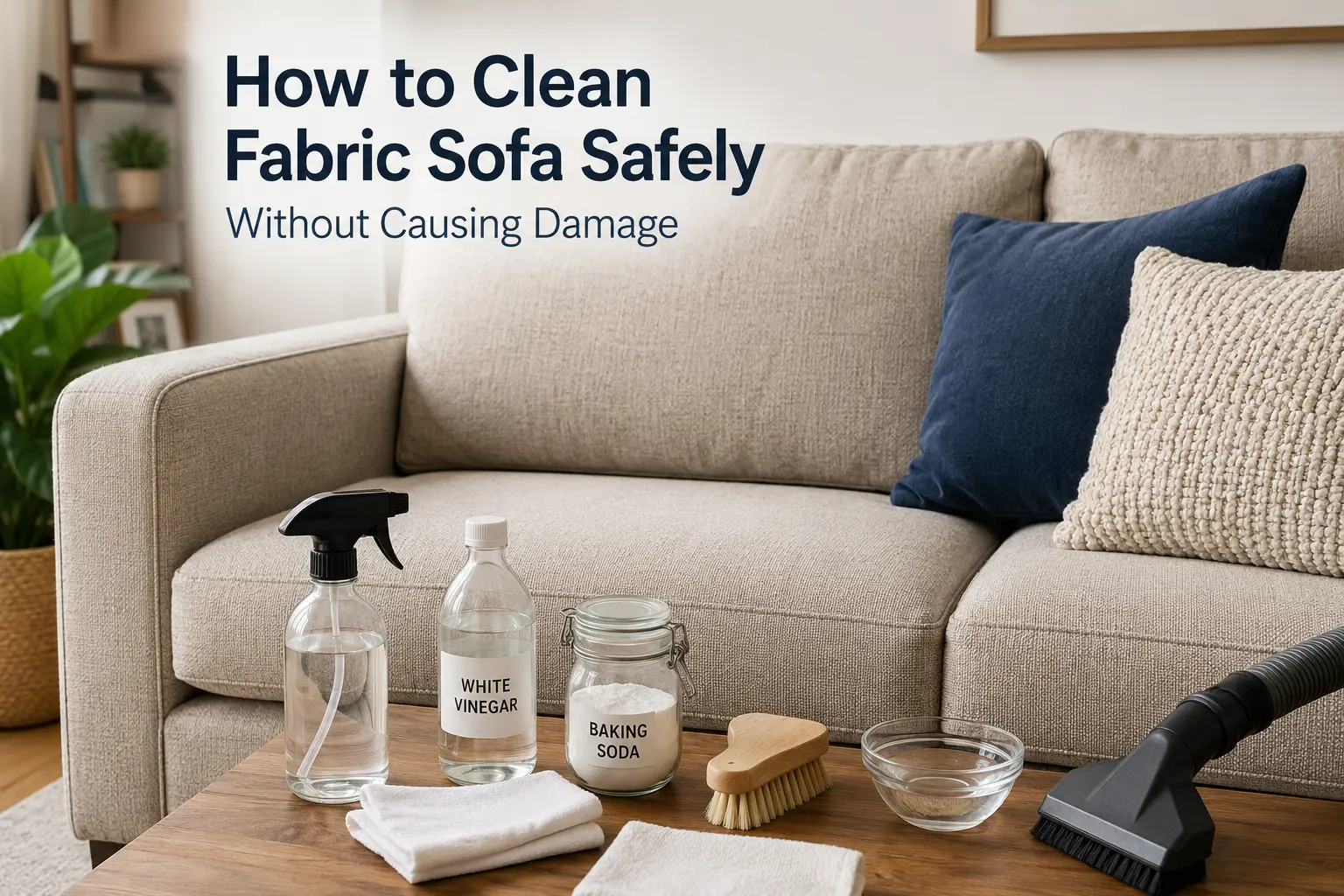
Knowing how to clean fabric sofa properly can save you from permanent stains, bad odours, and costly mistakes.
Fabric sofas are comfortable — and terrible at hiding mess .One spilled cup of tea, a muddy paw mark, or even a hot summer day can cause stains and odours that linger for a long time when not cleaned properly.
The good news? Learning how to clean a fabric sofa at home is genuinely simple once you know what your specific fabric needs. Get that part wrong, and even plain water can cause a permanent watermark. Get it right, and your sofa looks brand new without a penny spent on professional cleaning.
Start Here: Read the Cleaning Tag
That small white tag tucked under your cushion or along the bottom seam isn’t just there to annoy you. It carries a cleaning code that changes everything about how you should approach your sofa.

A lot of people skip this step and regret it. Cotton and linen sofas (W or W-S) handle moisture well. Viscose, velvet, and certain polyester blends can watermark instantly. Five seconds reading that tag saves you a ruined sofa.
Gather Your Supplies
Nothing exotic needed here:
- Vacuum cleaner with upholstery and crevice attachments
- Soft-bristle brush (an old toothbrush works for seams)
- Several clean white cloths — colored ones can transfer dye onto light fabric
- Mild dish soap
- White vinegar
- Baking soda
- Warm water in a spray bottle
- A dry-solvent upholstery cleaner if your sofa is “S” coded
That’s the whole toolkit. Avoid anything abrasive or bleach-based unless your sofa’s care label explicitly allows it.
How to Clean a Fabric Sofa: The Full Process
Step 1: Vacuum the Sofa First
- Take off all removable cushions before starting.
- Vacuum the full sofa, including the arms, back, and base.
- Use a crevice attachment to clean tight gaps and seams.
- Removing loose dust before cleaning helps prevent deeper staining.
- Moisture mixed with dirt can push debris further into the fabric.
Step 2: Freshen the Sofa with Baking Soda
- Spread a light coating of baking soda over the upholstery.
- Leave it on the fabric for at least 20–30 minutes.
- Let it sit longer if the sofa has strong odours.
- Baking soda helps pull out trapped smells and excess moisture.
- Vacuum the sofa thoroughly to remove all remaining powder.
- Keep baking soda dry instead of mixing it with liquid cleaners.
Step 3: Test the Cleaner on a Small Area
- Mix two drops of dish soap into a cup of warm water.
- Apply a small amount to a hidden part of the sofa first.
- Use a soft white cloth for the test area.
- Wait a few minutes to check the fabric reaction.
- Continue cleaning only if there is no fading or damage.
Step 4: Clean the Upholstery Gently
- Dip a clean cloth into the soap solution and wring it out well.
- The cloth should feel slightly damp instead of wet.
- Pat stained or dirty spots carefully.
- Avoid harsh scrubbing across the fabric surface.
- Rough scrubbing may spread stains and weaken the material.
- Start cleaning from the outer edge of the stain toward the centre.
- This technique helps stop the stain from expanding further.
- Wipe the area again using a cloth dampened with plain water.
- Press a dry towel onto the fabric to soak up leftover moisture.
Step 5: Let the Sofa Dry Completely
- Improve airflow around the sofa while it dries.
- Open nearby windows or place a fan facing the upholstery.
- Air conditioning can also help speed up drying time.
- Most fabric sofas become fully dry within a few hours.
- Do not use strong heat from a hair dryer, as it can damage the fabric.
- Excess heat may shrink the fabric or affect cushion shape.
- Wait until the sofa is fully dry before using it again.
- Sitting on damp upholstery can create fresh odours or marks.
Easy Ways to Remove Stains from a Fabric Sofa
Fast action improves stain removal. Fresh stains are easier to remove than dried stains.
Always blot stains immediately. Never scrub fabric upholstery aggressively.
Coffee or Tea Stains
- Blot the liquid immediately with a dry white cloth.
- Remove as much moisture as possible before cleaning.
- Combine one tablespoon of dishwashing liquid with one tablespoon of white vinegar.
- Add the mixture to two cups of warm water.
- Dampen a clean cloth with the solution.
- Blot the stain gently from the outside inward.
- Repeat until the stain lightens.
- Wipe the area using a clean cloth lightly dampened with fresh water.
- Press a dry towel onto the fabric to absorb moisture.
Red Wine Stains
- Use cold water only.
- Hot water can permanently set wine tannins.
- Use a dry cloth to absorb the spill as soon as it happens.
- Apply a little cold sparkling water directly to the stained area.
- Carbonation helps lift red wine from fabric fibers.
- Mix dish soap and white vinegar with warm water.
- Dab the cleaning solution onto the stain.
- Blot repeatedly without rubbing.
- Rinse with clean water.
- Dry the area thoroughly with a clean towel.
Grease or Cooking Oil Stains
- Sprinkle baking soda or cornstarch directly onto the grease.
- Let the powder sit for 15 minutes.
- The powder helps draw excess oil out of the fabric fibres.
- Brush away the residue gently.
- Use a dry-solvent cleaner on S-coded fabric sofas.
- Use a mild dish soap solution on W-coded fabric sofas.
- Avoid adding water to fresh grease stains.
- Water can spread oil deeper into upholstery fibres.
Pet Urine Stains
- Blot the affected area immediately.
- Remove as much liquid as possible before cleaning.
- Mix one cup of 3% hydrogen peroxide with one teaspoon of dish soap.
- Mix in one tablespoon of baking soda with the solution.
- Apply the solution lightly onto the stain.
- Leave the solution for 10 minutes.
- Pat the area with a clean cloth to absorb any remaining moisture.
- Allow the sofa to dry completely with good airflow.
- Use an enzyme-based pet cleaner for persistent odors.
- Enzyme cleaners break down odor-causing proteins.
Ink or Ballpoint Pen Stains
- Apply rubbing alcohol to a cotton ball.
- Dab the stain gently without rubbing.
- Work from the outside of the stain inward.
- Rubbing can spread ink across the fabric.
- Replace the cotton ball as ink transfers.
- Repeat until no more ink lifts from the upholstery.
- Act within the first hour for the best results.
How to Clean a Sofa Without Water
- S-coded sofas require water-free cleaning methods.
- Water can damage delicate upholstery fabrics.
- W-S coded sofas can also benefit from dry cleaning methods.
- Dry cleaning helps prevent water marks on sensitive fabric.
Dry-Solvent Upholstery Cleaner
- Dry-solvent upholstery cleaner is designed for water-sensitive sofas.
- Spray a small amount onto a clean white cloth.
- Avoid spraying directly onto the upholstery.
- Work the cleaner into the fabric using light strokes.
- Do not scrub the upholstery aggressively.
- Allow the fabric to dry completely.
- Vacuum away any remaining residue.
- Carbona makes dry-solvent upholstery cleaners.
- Woolite also offers upholstery-safe dry cleaners.
Dry Foam Upholstery Cleaner
- Dry foam cleaner works well on textured upholstery fabrics.
- Apply the foam evenly across the fabric surface.
- Allow the foam to dry completely before vacuuming.
- Do not rush the drying process.
- Vacuum the residue thoroughly after drying.
- Dry foam cleaning works well on velvet upholstery.
- Dry foam cleaning also suits chenille fabric sofas.
- Textured fabrics often respond better to low-moisture cleaning methods.
Baking Soda for Dry Sofa Cleaning
- Baking soda removes surface odors without water.
- Baking soda also helps absorb light dust and moisture.
- Sprinkle baking soda evenly across the sofa.
- Leave the powder on the upholstery for 20 to 30 minutes.
- Vacuum the sofa thoroughly after treatment.
- Baking soda cleaning works well for antique fabric sofas.
- High-pile upholstery fabrics also benefit from dry cleaning methods.
- Dry cleaning reduces the risk of water stains and fabric shrinkage.
Can You Steam Clean a Fabric Sofa?
Yes — with conditions.
Steam cleaning a fabric sofa is highly effective. It kills dust mites and bacteria, removes allergens, and loosens grime that surface cleaning misses. But it only works safely on “W” or “W-S” coded fabrics.
Hold the steamer nozzle two to three inches away from the surface. Keep it moving — pausing in one spot saturates the foam cushion inside, and wet foam can take days to dry out fully. Mildew in the foam is a much bigger problem than the original stain ever was.
Keep steam away from velvet, silk blends, and any fabric that shows water marks easily. When in doubt, stick to dry methods.
How to Clean Sofa Cushion Covers
A lot of sofas have zip-off cushion covers, which makes deep cleaning much easier. Before pulling them off, check the label sewn into the cover — not the sofa’s main tag.
If machine washable: Cold water, gentle cycle, mild detergent. Skip the dryer or use low heat only. Slip the cover back onto the cushion while slightly damp — this keeps the fabric from bunching and helps it regain its shape.
If hand wash only: Cool water with a small amount of gentle detergent. Squeeze gently — never wring or twist. Press between two clean towels to remove excess water and lay flat to dry.
If dry clean only: Don’t try to wash it at home. Dry-clean-only fabrics shrink unpredictably in water, and that’s not a problem you can fix after the fact.
Keeping Your Fabric Couch Clean Long-Term
Consistent light maintenance means you rarely need to do a full deep clean. Here’s what actually works:
Weekly: Vacuum cushions, flip them over, rotate them side-to-side. This distributes wear and prevents the same spots from compressing and fading.
Monthly: Baking soda treatment for freshness. Address any new spots before they set.
Every six to twelve months: Full clean using the method suited to your fabric. Once dry, apply a fabric protector spray like Scotchgard. It creates a light barrier that makes future spills bead on the surface instead of soaking in.
Ongoing: Keep the sofa out of direct sunlight. UV exposure fades fabric color and breaks down fibers faster than almost anything else.
Good upholstery also helps. At Designer Furniture Gallery, the fabric sofas are built with durable upholstery that withstands daily life — but even the best materials last longer with regular care.
Quick-Reference Cleaning Guide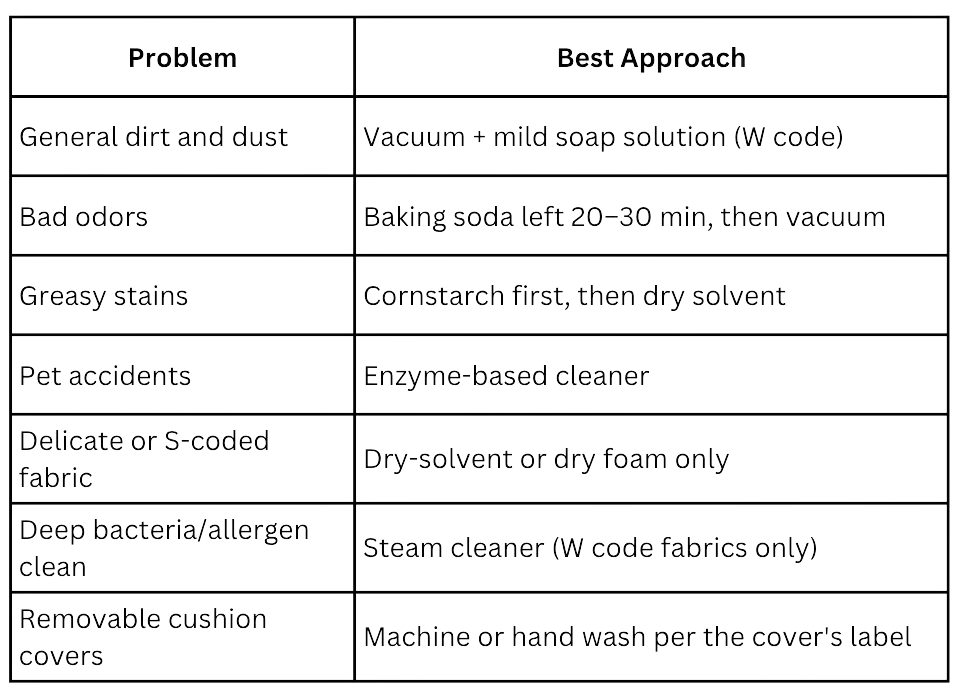
In Conclusion
Most people overcomplicate this. Knowing how to clean a fabric sofa really comes down to three things: reading the cleaning code, matching your method to the fabric, and acting fast when spills happen.
Do those three things consistently, and you’ll rarely need to call in a professional cleaner. Your sofa handles everyday life just fine — it just needs the right kind of attention when things go wrong.
For more on caring for quality upholstered furniture, visit Designer Furniture Gallery