


How to Choose the Right Dining Table for Your Home

Most people spend weeks picking the right sofa. Then they spend about fifteen minutes picking their dining table – and regret it later.
The dining table is one of the hardest-working pieces of furniture in your home. It is where your family eats, where kids do homework, where friends gather. Getting it right matters.
This dining table buying guide walks you through everything in plain, simple steps – from measuring your room to choosing the right material -so you walk away with total confidence in your decision.
Step 1: Start With Your Room Size
The first thing to do before anything else is measure your dining room. Not in your head – actually measure it with a tape.
The standard rule when learning how to choose a dining table is this: leave at least 90 cm of clear space on every side of the table. This gives people enough room to pull out their chair, sit down comfortably, and walk past without squeezing.
Here is a simple guide based on how many seats you need:

Standard dining table height is between 75 cm and 77 cm. Chair seats should sit between 45 cm and 48 cm from the floor. Always check both measurements together – a chair that is too tall or too short makes every meal uncomfortable.
If your dining area is open to the kitchen or sits along a walkway, be extra careful. A table that looks fine in a photo but blocks your natural movement will become a daily frustration.
Step 2: Choose the Right Shape for Your Room
Shape is not just about looks. It directly affects how many people you can seat and how the room feels to move around in.
- Rectangular tables are the most popular choice and for good reason. They work in almost every room size, seat the most people, and suit both modern and traditional styles. If you are not sure which shape to pick, rectangular is your safest option.
- Round tables suit smaller rooms and make conversation easier since everyone faces each other. There are no corners cutting into floor space, and they feel relaxed and informal. Keep in mind that round tables can have a wider footprint than you expect.
- Oval tables are a smart choice for medium-sized rooms. They give you the softness of a round table with the extra seating of a rectangular one. A solid middle-ground option.
- Square tables work well in square rooms and feel balanced and neat. They suit smaller households best as they are limited for larger groups.
A quick tip: long and narrow room — go rectangular. Square room — try round or square. Not sure — oval covers most situations.
Step 3: Pick a Material That Suits Your Life
This is where most people make mistakes. They pick a material based on how it looks in a photo and forget to think about how they actually live day to day.
Here are the main options and who they work best for:
Solid Wood
- Oak, teak, and sheesham are popular choices
- Strong, durable, and long-lasting
- Ages well with regular use
- Needs occasional oiling
- AARNA Cube Dining Table in Sheesham Wood at DFG is a great example
Marble and Stone
- Premium and elegant look
- Heat-resistant and very durable
- Needs sealing to avoid stains
- Heavy and hard to move
- Adelaide 260 cm Dining Table at DFG comes in black and white marble
Glass
- Makes the space look bigger
- Easy to clean
- Shows fingerprints easily
- Not ideal for homes with kids
MDF and Engineered Wood
- Budget-friendly option
- Modern and clean look
- Less durable than solid wood
- Good for most homes
Teak and Iron
- Great for industrial style
- Strong and durable
- Mix of wood and metal look
- DFG offers a good range in this style
Families with young children do better with solid wood or stone. A couple in a modern flat might prefer marble or glass for that sleek, premium dining table feel.
Step 4: Fixed Table or Extending Table?
This question is easy to overlook but important to answer before you buy.
A fixed table stays one size. It is cleaner looking, usually more affordable, and feels more solid. If your household size stays consistent, this is the straightforward choice.
An extending table can grow when you need it. For everyday meals it stays compact. When guests arrive, you open it up to full size. This is the smarter option for anyone who hosts regularly or has a smaller dining room day to day.
DFG’s extending dining table range is designed for UK homes where space is often tight. The KALI Rectangular Wooden Dining Table with Extension is a popular pick — currently £830, reduced from £1,155.
The flip-top table is another option worth knowing. It folds flat when not in use and opens fully when you need the extra surface.
Step 5: Match Your Table to Your Home’s Style
A table that clashes with your interior will always feel out of place, no matter how good it looks on its own. Knowing how to choose a dining table also means thinking about what you already have in your home.
Modern and contemporary homes suit clean lines, neutral colours, and sleek materials like glass, marble, or high-gloss lacquered wood.
Traditional homes suit warm solid wood tones — oak, walnut, or mahogany — with turned legs and subtle detailing.
Scandinavian interiors call for light wood, simple shapes, and thin tapered legs. Nothing heavy or ornate.
Industrial-style homes work well with dark wood and metal legs or teak and iron combinations.
If your home mixes styles — which most homes do — a solid oak or walnut rectangular table in a neutral finish is almost always the right answer. It sits well with most chair styles, colour schemes, and flooring types.
Step 6: Get the Chair Pairing Right
A dining table without the right chairs is like a great outfit with the wrong shoes.
Chair seat height should be 45 to 48 cm for a standard table at 75 to 77 cm height. Leave 27 to 30 cm between the seat and the underside of the table — this is the knee gap that makes sitting comfortable for long meals.
You do not need to match the table and chairs exactly. A wood table with upholstered chairs looks intentional and stylish. A marble top with leather chairs works well too. What to avoid is a mismatch in scale — heavy chunky chairs around a delicate slim table.
DFG offers ready-matched dining sets that take the guesswork out completely. Or browse dining chairs separately if you prefer to build your own combination.
Dining Room Design Ideas to Complete the Look
Once the table is sorted, a few extra touches will pull the whole room together. These dining room design ideas make a real visible difference without much effort:
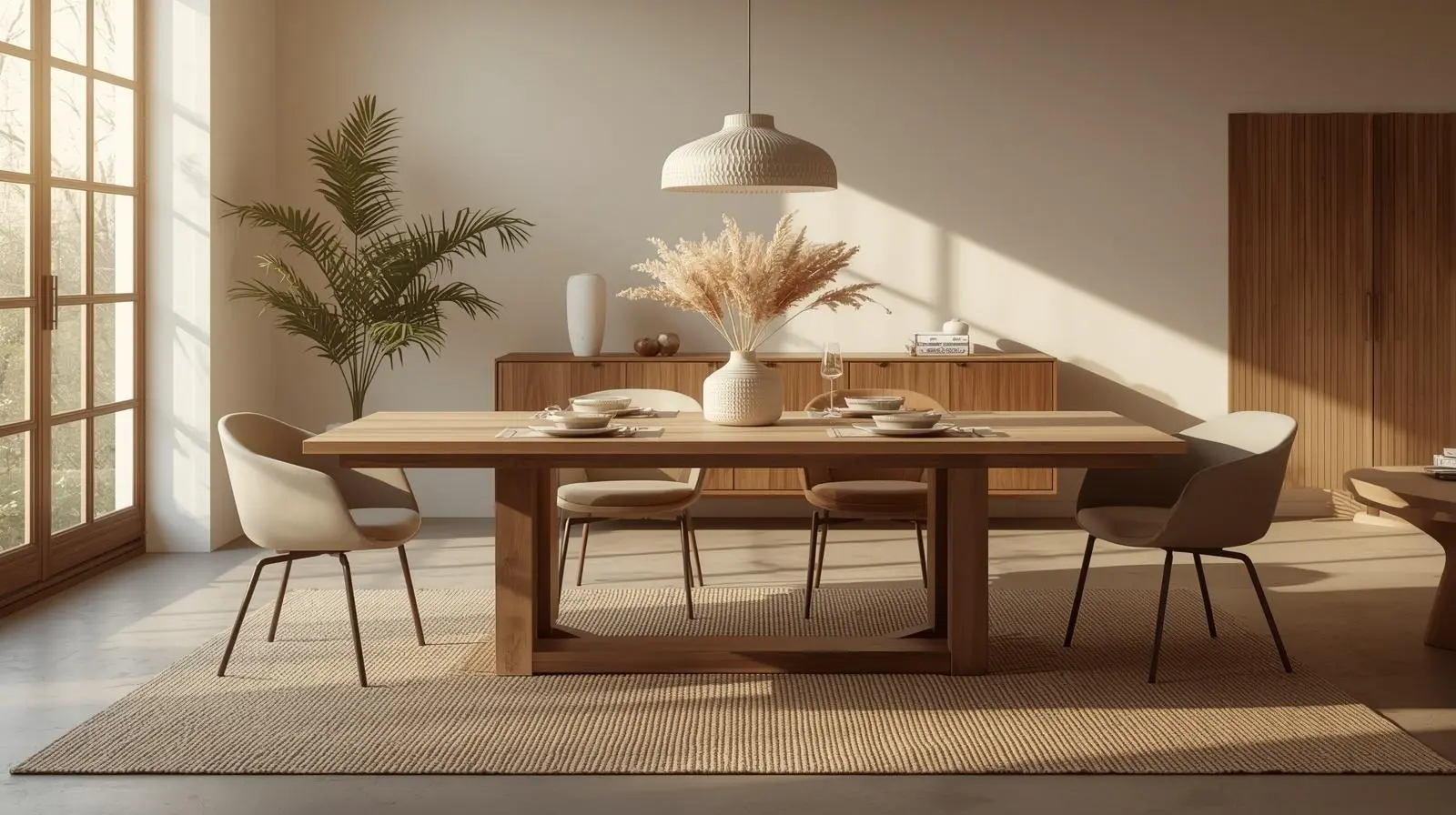
- Add a sideboard on the opposite wall for storage and visual balance. DFG’s sideboard range has plenty of options.
- Hang a pendant light roughly 75 to 90 cm above the table surface. This defines the area and adds a layer of texture underfoot.
- Use a rug large enough for all chair legs to sit on it — even when chairs are pulled out from the table.
- Mix arm chairs at the head positions and armless chairs along the sides for a clean, finished look.
Small details make the difference between a table that sits in a room and one that actually belongs there.
Quick Summary: This Dining Table Buying Guide in 6 Steps

Find Your Perfect Dining Table at Designer Furniture Gallery
If you are near Thurrock, Lakeside, Essex, Basildon, or London, Designer Furniture Gallery at Unit 4, West Thurrock Retail Park, Thurrock, RM20 3LP is worth a visit. With a wide selection of quality dining tables across every style and material, free shipping on orders over £1,000, and 0% interest options available, it is one of the best places in the UK to find a table that genuinely suits your home.
Browse the full dining table collection online or visit the store in person. Designer Furniture Gallery is always here to support you.
FAQ’s
1.What size dining table works best in a small room?
A dining table between 120 cm and 150 cm is ideal for smaller spaces.It sits well in the space without making the room feel crowded. Make sure to keep around 90 cm of clearance on all sides, and consider an extendable table if you need extra seating occasionally.
2.Which dining table material lasts the longest?
Solid wood is one of the most reliable and long-lasting materials for daily use. Woods like oak and sheesham are known for their strength and durability over time. Marble is another durable option, though it needs sealing to protect against stains.
3.What is the typical height range for a dining table?
Most dining tables are designed with a height of 75 cm to 77 cm. Chairs usually have a seat height between 45 cm and 48 cm for proper alignment. Keeping a gap of about 27 to 30 cm between the seat and tabletop ensures comfortable seating.
4.Is a fixed or extendable dining table better?
A fixed table is suitable if your seating needs stay the same every day. An extendable table is more flexible and works well when you occasionally need extra space for guests. It helps you save space without giving up functionality.
5.What dining table shape is best for compact spaces?
Round tables are a great choice for smaller rooms as they allow better movement around the space. They also create a more open and less crowded feel. In narrow areas, a rectangular table placed along a wall can also work well.