



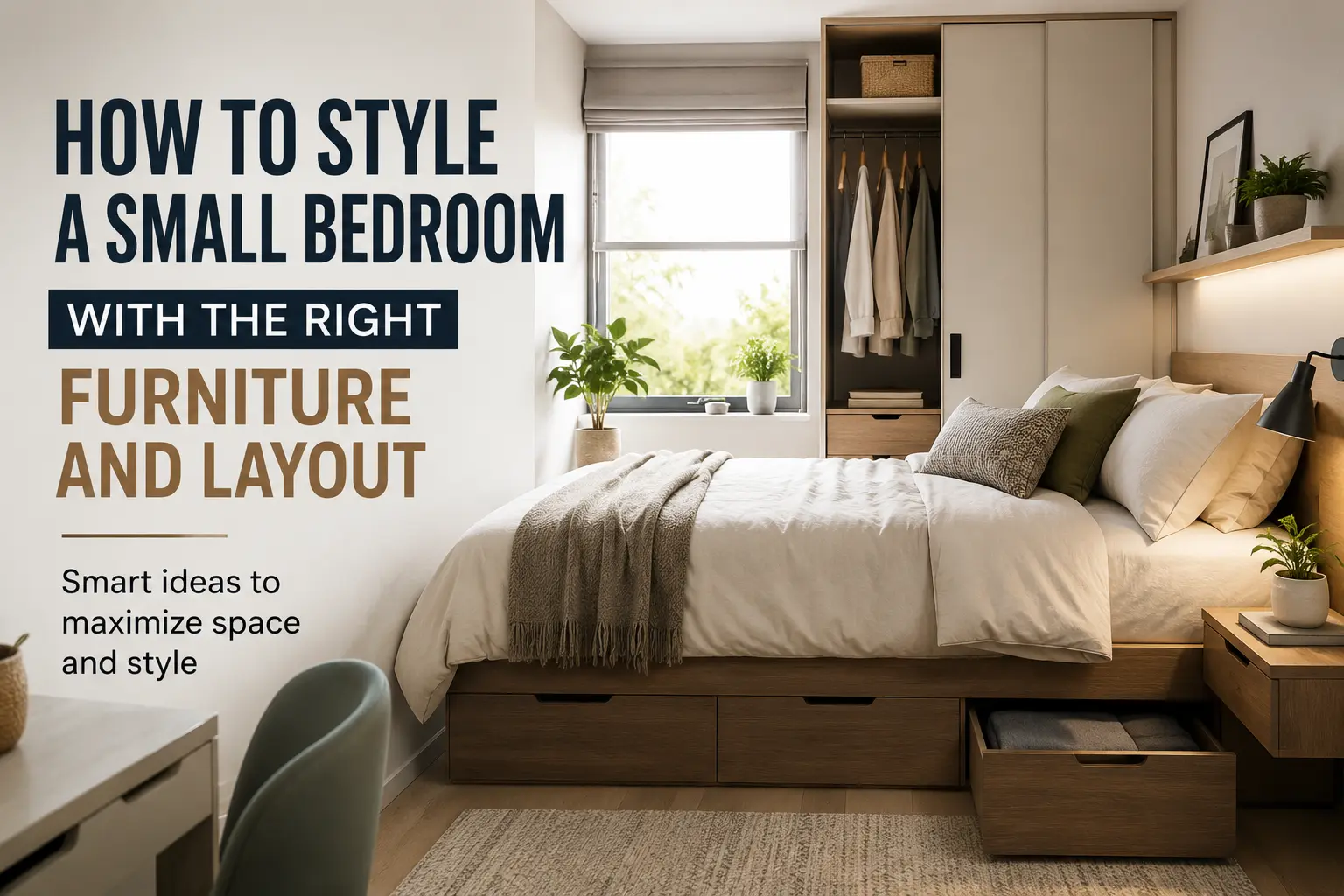
How to Style a Small Bedroom with the Right Furniture and Layout

Does your bedroom feel cramped and cluttered rather than calm and relaxing?
You’re not alone. Millions of people live in apartments and homes where the bedroom is the smallest room in the house. But a tight floor plan doesn’t mean you have to give up comfort or style.
Knowing how to style a small bedroom the right way changes everything. The right furniture, a smarter layout, and a few clever tricks can make even the most cramped room feel open, calm, and put-together.
Learning how to style a small bedroom starts with selecting the right furniture and arranging it in a way that maximizes both comfort and functionality.
Why Small Bedroom Styling Is Different
Small bedrooms don’t respond well to standard decorating rules. What works in a large room often makes a small one feel cluttered and closed in.
According to a 2023 report by the National Association of Home Builders, the average bedroom size in newly built homes in the US is around 132 square feet. In urban apartments and older homes, it’s often far less – sometimes as small as 70–90 square feet.
That means you need to be intentional. Every piece of furniture, every colour choice, and every storage decision has to earn its place.

Step 1: Choose Functional Furniture That Maximizes Space
This is where most people go wrong. They either cram in too much furniture or choose pieces that are too large for the room.
Good small bedroom furniture ideas cover three things: scale, function, and visual weight. Getting these right is the foundation of all practical furniture for small bedrooms.
- Scale means choosing furniture sized to the room – not oversized statement pieces that dominate the floor plan.
- Function means every piece should serve more than one purpose wherever possible.
- Visual weight refers to how strongly a design element stands out compared to others. Light-coloured, slim-legged furniture makes a compact room feel more open.
Finding the right furniture is essential when styling a compact room. From storage beds to fitted wardrobes, Designer Furniture Gallery offers practical furniture options that help maximize both comfort and space.
The Best Bed Types for Tight Spaces
The bed usually takes up the most floor space, so choosing the right one matters a lot.
Here are the bed types that work best in tight spaces:
- Divan beds with built-in drawers – the base doubles as storage, so you don’t need a separate dresser
- Ottoman beds – the entire mattress lifts to reveal a large storage cavity underneath; ideal for small bedroom storage ideas
- Loft beds – raise the sleeping area so the floor space below can be used as a desk or seating zone
- Murphy beds (wall beds) – fold flat against the wall during the day; great for studio flats or rooms that double as a home office
- Platform beds with low profiles – keep the visual horizon low, making ceilings feel higher
Choosing a smart bed is one of the simplest ways to reclaim floor space. Space saving beds for small rooms are not a compromise – they are simply smarter choices.
Wardrobes for Small Bedrooms
Clothing storage is one of the biggest challenges in a small room – and one of the most overlooked small bedroom furniture ideas. A large freestanding wardrobe can block light and make the room feel boxed in.
The best wardrobe for small bedroom setups include:
- Floor-to-ceiling fitted wardrobes – use every inch of vertical space and look clean against the wall
- Sliding door wardrobes – don’t need swing clearance, saving up to 2–3 feet of usable floor space
- Corner wardrobes – make use of awkward dead corners
- Open rail wardrobes – create a lighter, more spacious look and are often budget-friendly. Add matching baskets to keep clothing and accessories neatly organized.
Space saving wardrobes for small rooms work best when they are built into recesses or placed along the longest wall in the room.
Other Key Furniture Pieces
Beyond the bed and wardrobe, the most effective furniture for a small bedroom maximizes storage while keeping surfaces uncluttered.
- Choose a bedside table with a drawer instead of just a shelf
- Use a floating shelf instead of a full nightstand if the room is very tight
- A narrow desk with wall-mounted shelving above works better than a large writing desk
- Avoid using an oversized rug. A smaller rug positioned beneath the foot of the bed creates a balanced look while allowing more flooring to remain visible.
Step 2: Plan the Layout Before You Move a Single Piece
Layout planning is the most underrated part of small room design. A good layout makes a modest room feel much larger than it is. It’s also where small room design choices like bed placement and walkway width either work together – or against each other.
Start With the Bed Placement
The bed dictates everything else. In most small bedrooms, the best position is:
- Against the longest wall
- In a corner (if using a single or small double)
- Place the bed against the wall directly opposite the door to create an open sightline that makes the room appear larger.
Avoid placing the bed in the centre of the room unless you have extra floor space on all sides.
Leave a Clear Path
A minimum 60cm (about 24 inches) of walkway space on the side of the bed is ideal. If the room is very narrow, even 45cm is workable. The key is that you don’t feel like you are squeezing past furniture every time you get up.
Think in Zones
Even a small bedroom can have zones:
- Sleep zone – the bed and beside tables
- Storage zone – wardrobe, drawers, shelving
- Getting-ready zone – a mirror, small vanity, or hanging space near the wardrobe
Keeping these zones distinct makes the room feel organised rather than chaotic.
Step 3: Use Colour and Light to Open Up the Space
Modern small bedroom designs almost always use colour strategically. Here’s what actually works:
Light and Neutral Base Colours
Light walls reflect more natural light, which makes the room feel bigger. Off-white, warm beige, soft grey, and pale sage are all solid choices.
This doesn’t mean your room has to be boring. You can add warmth through:
- A feature wall in a slightly deeper tone
- Coloured bedding and cushions
- Warm-toned wood furniture
Mirrors
A large mirror on one wall is one of the most effective ways to make a small bedroom feel larger. It reflects both light and the rest of the room, creating the illusion of depth.
Position a full-length mirror on the back of the door or on the wall opposite a window for maximum effect.
Lighting
Poor lighting makes small rooms feel smaller. Layer your lighting:
- Natural light – keep window areas clear; avoid heavy curtains
- Ceiling light – a flush-mount or semi-flush fitting keeps the visual ceiling height intact
- Bedside lamps or wall-mounted reading lights – removes the need for large bedside tables.
Step 4: Use Vertical Space
Most people think horizontally when decorating. In a small bedroom, you need to think vertically too.
The space between the top of your wardrobe and the ceiling is usable. So is the wall above your bed.
- Install floating shelves above the bed for books, small plants, or decorative items
- Use tall, slim bookshelves rather than wide, short ones
- Hang curtains from ceiling height (not the window frame) to draw the eye upward and make ceilings feel taller
Simple Styling Tips for a Small Bedroom
Styling a small bedroom is about creating visual balance. Too many colours, patterns, or decorative items can quickly make the room feel crowded.
To keep the space looking stylish:
- Stick to a consistent colour palette
- Choose bedding that complements the wall colour
- Use one statement artwork instead of multiple small pieces
- Add texture with cushions, throws, and rugs
- Keep decorative accessories minimal
A few carefully chosen decorative elements often have a bigger impact than filling every available surface.
Step 5: Declutter Ruthlessly
This might be the most important step of all. No amount of clever styling will save a room that is full of clutter.
A good rule: if it doesn’t belong in a bedroom, it shouldn’t be in the room.
That means:
- Moving out bulky items that don’t serve a bedroom function
- Using under-bed storage for seasonal items
- Keeping surfaces (bedside tables, dressers) as clear as possible
- Rotating décor rather than displaying everything at once
Smart Space-Saving Ideas for Small Bedrooms
Even the smallest bedroom can feel more spacious when you make better use of every inch available.
Here are some practical ways to maximise space:
- Use under-bed storage boxes for seasonal clothing and bedding
- Install wall-mounted shelves instead of bulky bookcases
- Replace traditional bedside tables with floating shelves
- Add hooks behind doors for bags, robes, and accessories
- Use storage benches at the foot of the bed
- Choose fold-down desks if you work from home
Small changes like these can free up valuable floor space without sacrificing functionality.
Quick Summary: What Makes a Small Bedroom Work
Here’s a fast reference list for anyone still working out how to style a small bedroom:
- Choose furniture that’s scaled to the room, not oversized
- Prioritise multi-functional pieces (storage beds, slim wardrobes)
- Place the bed along the longest wall
- Use light, neutral base colours with warm accents
- Install a large mirror to add depth
- Think vertically – use wall space and ceiling height
- Layer lighting to avoid a dull, flat feel
- Keep surfaces clear and storage hidden
Final Thoughts
Learning how to style a small bedroom is all about making smarter choices. The right furniture, an efficient layout, and clever storage solutions can transform even the most compact room into a comfortable and attractive space.
Focus on furniture that works harder, make the most of vertical space, keep clutter under control, and use light and colour strategically. With a little planning, a small bedroom can feel just as functional and inviting as a much larger one.
Whether you’re furnishing a compact apartment or updating a guest room, choosing well-designed furniture can make all the difference. Browse the latest collections at Designer Furniture Gallery for inspiration and space-saving solutions.
Frequently Asked Question
1.What is the best bed size for a small bedroom?
A full (double) bed works well in most small bedrooms. A queen can fit in rooms that are at least 10 × 10 feet, but a full gives you more breathing room around the sides. For very small rooms under 90 square feet, a single or small double with built-in storage is the smarter choice.
2.How do I make my small bedroom look bigger?
Use light-coloured walls, hang mirrors strategically, choose slim-profile furniture, and keep floor space as clear as possible. Hanging curtains from ceiling height also creates the illusion of taller walls.
3.Are built-in wardrobes worth it for small bedrooms?
Yes. Built-in or fitted wardrobes make better use of wall space, keep the room looking clean, and often provide more storage than a freestanding unit of the same size. They are a long-term investment worth making if you plan to stay in the space.
4.What colour makes a small bedroom look larger?
Light colours – soft white, pale grey, warm cream, or light sage – reflect more light and create a sense of openness. Painting the ceiling in the same tone as the walls (or slightly lighter) also helps raise the perceived height.
5.Can I have a desk in a small bedroom?
Yes. A wall-mounted fold-down desk or a slim floating desk with a single drawer is the most space-efficient option. Pair it with a small stool that can be tucked underneath rather than a bulky chair.
6.How do I add storage to a small bedroom without making it feel cluttered?
Focus on hidden storage – ottoman beds, divan drawers, built-in wardrobes with internal organisers, and under-bed boxes. Visible clutter is the enemy. When storage is concealed, the room stays calm and open.
7.What type of wardrobe is best for a very narrow bedroom?
A sliding door wardrobe is best for narrow rooms because it requires no swing space when opening. Pair it with internal shelf organisers to maximise the depth of the wardrobe itself.
8.Should I use an open-plan layout or zone my small bedroom?
Zoning is almost always better. Even simple visual zones – sleep, storage, getting ready – give the room a sense of order. Open-plan small bedrooms can quickly feel chaotic if there is no clear organisation to the space.